Parasympathetic Activation: How to Find Your Calm
Key Insights
Explore the science of your 'rest and digest' state. Learn how parasympathetic activation can soothe stress and how sound wellness at Soul Art Dubai can help.
In our hyper-connected, fast-paced world, does the feeling of being constantly "on" seem like the new normal? For many, the hum of chronic stress is a constant companion, leaving us feeling wired, tired, and disconnected from our own bodies. But what if your body held its own powerful, built-in antidote—a state of profound calm, deep healing, and restoration?
This state is not a fleeting luxury; it is a physiological necessity governed by a crucial part of your nervous system. It's known as the parasympathetic state, or more intuitively, the "rest and digest" response. Understanding how to consciously activate this system is one of the most transformative skills you can cultivate for your long-term wellbeing.
This article will demystify the elegant science behind your body's relaxation response. We will explore the intricate dance between your "fight or flight" and "rest and digest" systems, unpack how simple practices can trigger this calming cascade, and reveal how the curated sound experiences at Soul Art are designed to guide you effortlessly into this state of deep recovery.
The Science Explained: Your Body's Two Speeds
Deep within you, an intelligent, automatic system is constantly working to maintain balance. This is the autonomic nervous system (ANS), the command center that controls your involuntary functions like heartbeat, breathing, and digestion. The ANS is comprised of two main branches that act in a complementary, push-and-pull fashion to help you navigate the world.
The "Gas Pedal": The Sympathetic Nervous System (SNS)
Imagine a car's accelerator. This is your sympathetic nervous system (SNS). As described in research from Harvard Health, the SNS is your "fight or flight" mechanism. When your brain perceives a threat—whether it's a genuine danger or the modern stress of an overflowing inbox—it triggers the SNS.
This system releases hormones like adrenaline and noradrenaline, preparing your body for immediate, decisive action. Here's what happens:
- Heart rate and blood pressure increase, pumping oxygen-rich blood to your major muscles.
- Breathing becomes faster and shallower to maximize oxygen intake.
- Pupils dilate to sharpen your vision.
- Blood flow is diverted away from non-essential functions, like digestion, and toward your limbs.
While essential for survival, chronic activation of the SNS due to persistent stress can leave the body in a prolonged state of high alert, contributing to a host of wellness challenges.
The "Brake Pedal": The Parasympathetic Nervous System (PNS)
In contrast, the parasympathetic nervous system (PNS) is your body's brake pedal. It promotes the "rest, digest, and restore" processes that are vital for healing and energy conservation. When the PNS is dominant, your body receives the signal that it is safe to relax and recover.
According to the medical resource StatPearls, the PNS operates through a different chemical messenger: acetylcholine. When released, this neurotransmitter travels between nerve cells and binds to specific receptors on your organs, initiating a cascade of calming effects.
The Chemical Messenger of Calm: Acetylcholine
When the PNS is activated—through stimuli that your brain interprets as safe and relaxing—acetylcholine gets to work. It binds to what are known as muscarinic receptors located throughout the body, producing the signature effects of the "rest and digest" state:
- Heart rate slows down and blood pressure lowers.
- Breathing becomes deeper and more regular, as detailed in studies on meditation's effects.
- Digestion and saliva production are stimulated, allowing your body to process nutrients and repair tissues.
- Bronchial tubes in the lungs constrict slightly, and pupils return to a normal size.
Essentially, the PNS brings your body back into a state of homeostasis, or internal balance, allowing for crucial maintenance and repair functions to take place.
A Dynamic Balance, Not an On/Off Switch
For a long time, these two systems were seen as purely oppositional—when one is on, the other is off. However, recent research reveals a more nuanced and cooperative relationship. Studies have shown that the SNS and PNS can function independently and even work together in certain contexts.
For example, groundbreaking 2023 research from the University of Auckland found that the vagus nerve—a primary highway of the parasympathetic nervous system—is surprisingly active during exercise. It seems the PNS works in concert with the SNS to help the heart pump more efficiently, challenging the old "on/off" model. This highlights the incredible intelligence of our nervous system, which constantly modulates its response to meet the demands of the moment.
From Theory to Felt Experience: What Parasympathetic Activation Feels Like
Understanding the neuroscience is one thing, but recognizing the shift into the parasympathetic state within your own body is a profound experience. It's a journey from the tense, scattered energy of a sympathetic state to a feeling of grounded, integrated calm.
When your PNS becomes dominant, the changes are both subtle and deeply felt. You may first notice your breath, which naturally deepens and slows without any conscious effort. The frantic pace of your heart begins to soften into a slow, steady rhythm. A feeling of warmth might spread through your limbs as blood vessels dilate and circulation improves.
Many of our clients at Soul Art are surprised when they hear their own stomach gently gurgle or rumble during a session. Far from being a distraction, this is one of the clearest and most welcome signs that the PNS has taken over. It means blood flow has returned to your digestive organs, and your body has switched from "threat response" to "internal maintenance."
"The moment you hear your stomach gently rumble during a deep relaxation session is not a distraction; it's a profound signal from your body that you have successfully shifted into a state of healing and restoration."
Mentally, the shift is just as significant. The racing thoughts and mental chatter begin to quiet, replaced by a sense of spaciousness and presence. The feeling is not one of drowsiness, but of deep, wakeful relaxation—a state of being where your body and mind are finally in serene alignment. This is the physiological state that practices like deep breathing, meditation, and listening to calming music are designed to induce, a fact supported by a study in PLOS ONE which directly linked music with increased PNS activity.
The Soul Art Method: Activating Rest and Digest Through Sound
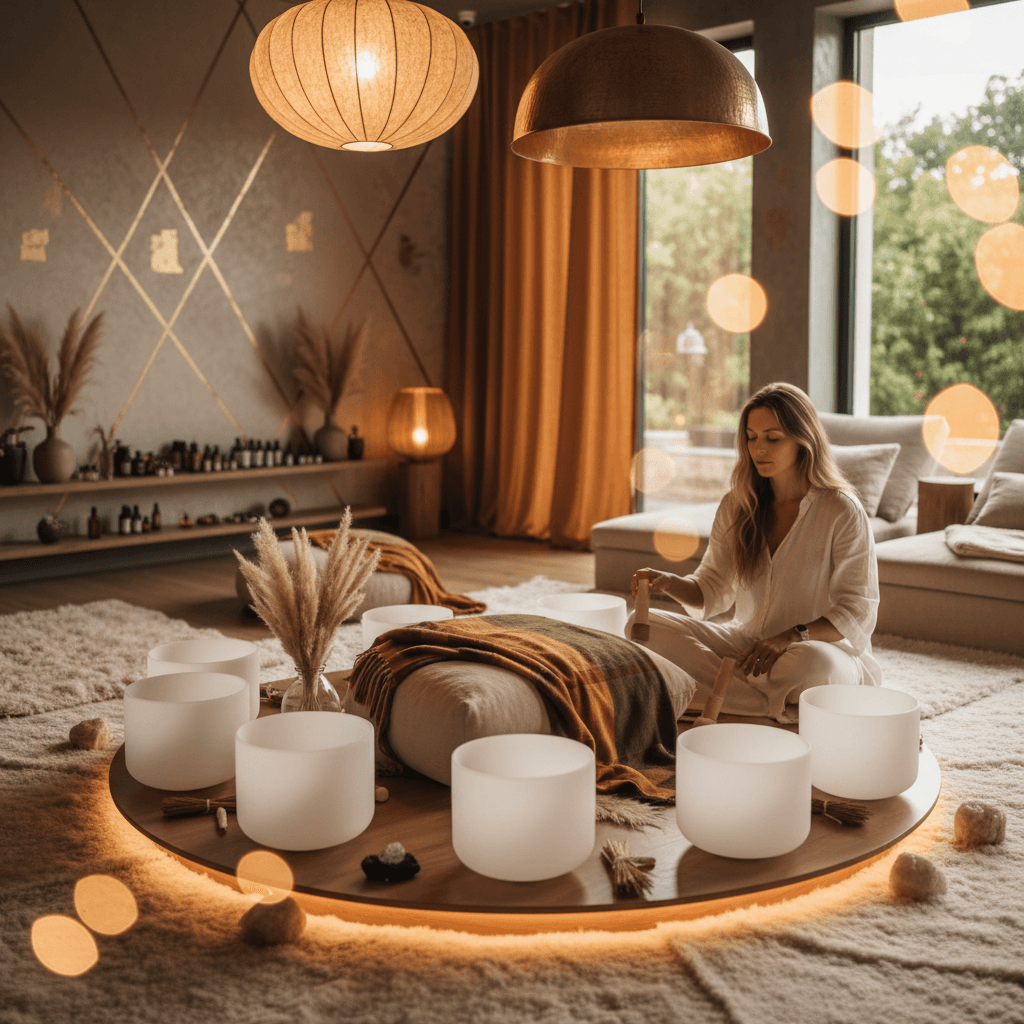
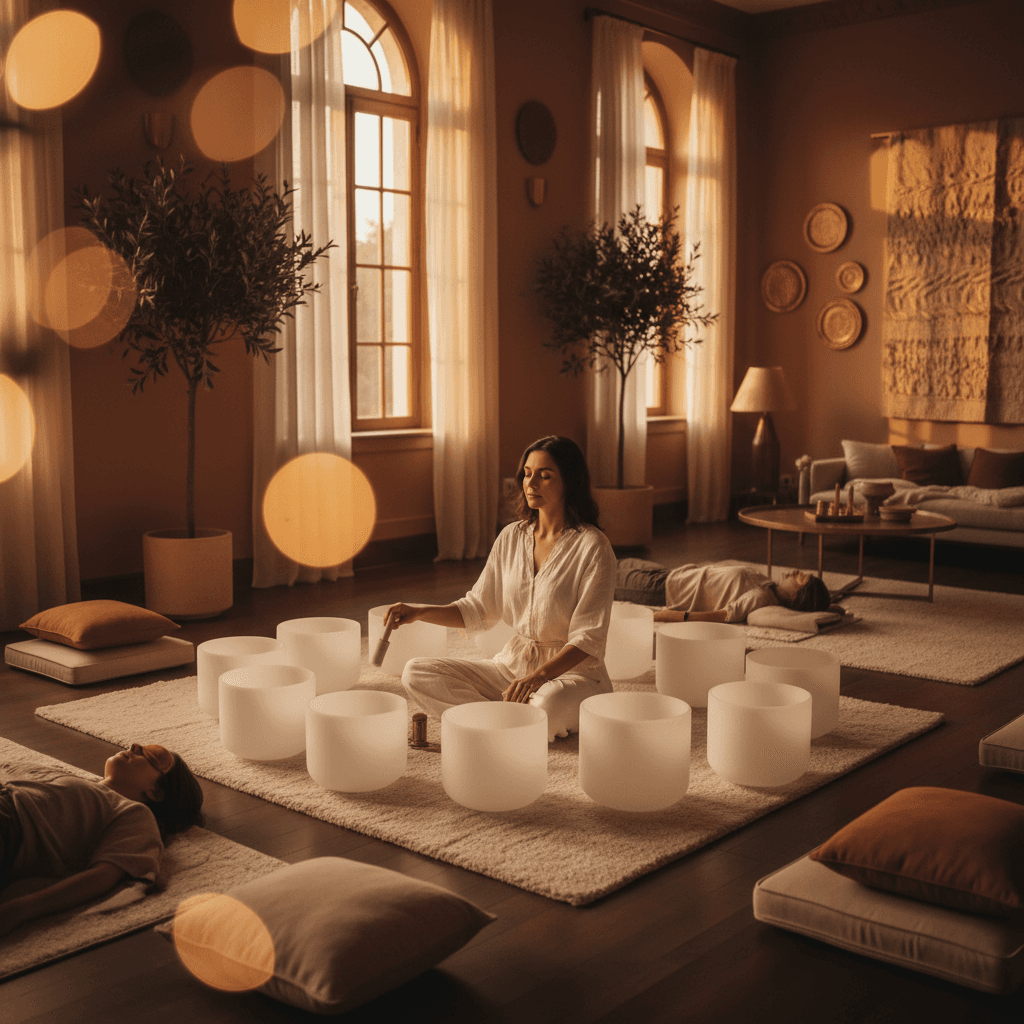
At Soul Art, we specialize in creating the ideal auditory environment to guide your nervous system out of chronic stress and into the restorative parasympathetic state. My approach, as founder Larissa Steinbach, is rooted in the scientific understanding that sound is not merely something we hear—it is a vibration that the body feels and responds to on a cellular level.
We use precisely tuned instruments to generate frequencies and harmonics that directly communicate with your nervous system, making it easier to let go than to hold on. Our method is built on several key principles:
-
Vagal Nerve Toning: The vagus nerve is the superhighway of the PNS, connecting the brain to the heart, lungs, and digestive tract. We use specific low-frequency instruments, like therapeutic gongs and Himalayan singing bowls, to create gentle vibrations that may help to stimulate and tone this crucial nerve, signaling safety to your entire system.
-
Brainwave Entrainment: The resonant, patterned sounds of crystal bowls and chimes encourage your brainwaves to shift from the high-alert beta state (associated with active thinking) to the slower, more relaxed alpha and theta states (associated with meditation and deep calm). This process, known as entrainment, helps quiet the mind, which is a key step in allowing the PNS to become dominant.
-
Encouraging Slower Respiration: The pacing and rhythm of a sound session naturally guide your breathing to become slower and deeper. As research has repeatedly shown, elongating your exhale is a powerful, direct bio-hack for activating the parasympathetic nervous system. The soundscape provides an effortless anchor for this process.
Cultivating Your Calm: Practical Steps to Activate Your PNS
While a guided sound session can provide a profound reset, building nervous system resilience is also about integrating small, consistent practices into your daily life. Here are a few simple yet powerful techniques you can use to activate your parasympathetic response anytime, anywhere.
-
Practice the Physiological Sigh: This is a simple, two-part breath that has been shown to rapidly calm the nervous system. Inhale deeply through your nose, and when you feel your lungs are full, take one more short sip of air. Then, exhale slowly and completely through your mouth. Repeat 2-3 times.
-
Conscious Exhalation: The key to calming your nervous system with breath is to make your exhale longer than your inhale. Try a simple rhythm: inhale through your nose for a count of four, and exhale slowly through your mouth for a count of six or eight. This directly stimulates the vagus nerve.
-
Mindful Listening: As research suggests, calming music can be a powerful tool. Set aside 10 minutes to listen to a piece of ambient or classical music without any other distractions. Pay full attention to the textures, tones, and vibrations, allowing the sound to wash over you.
-
Gentle Movement: Activities like slow walking, tai chi, or gentle stretching send signals of safety to your brain. As neurologist Dr. Gurneet Sawhney notes, these movements help activate the PNS and move your body out of a stressed posture.
These practices are not about adding another task to your to-do list, but about creating intentional moments of pause. For a more immersive experience, a professional sound session can provide a powerful, guided journey into the deepest levels of your "rest and digest" state.
The Power of the Pause
Your body is equipped with an extraordinary capacity for self-healing and restoration. The key lies in learning to intentionally shift out of the sympathetic "fight or flight" mode that dominates modern life and into the nourishing calm of the parasympathetic "rest and digest" state. This is not an indulgence; it is a fundamental requirement for resilience, vitality, and long-term wellbeing.
By understanding the science, recognizing the feelings, and using simple tools like breath and sound, you can reclaim your natural state of balance. Activating your parasympathetic nervous system is a practice of profound self-care, allowing your body and mind the space they need to repair, recharge, and thrive.
At Soul Art Dubai, we are dedicated to creating a sanctuary where this deep reset is not only possible but effortless. We invite you to experience the transformative power of sound and rediscover the peace that resides within you.
Bookings Coming Soon
Soul Art is still in preparation. Session details and booking will be published here after launch.
Coming Soon
Related Articles
Advanced Biohacker: Optimizing Wellness with Complex Sound Protocols
Ozone Therapy & Sound: Mastering Oxidative Stress for Vitality
Hyperbaric Oxygen & Sound: Synergizing Wellness & Brain Vitality