Understanding Misophonia Triggers: A Sound Wellness Perspective

Key Insights
Explore the neuroscience of misophonia triggers, the impact of practitioner language, and how sound wellness supports nervous system regulation at Soul Art Dubai.
The Silent Struggle: Navigating Misophonia Triggers with Empathy and Science
Imagine a world where the simplest, most innocuous sounds – a gentle chew, a faint tap, or a soft sniff – ignite an immediate, overwhelming torrent of anger, anxiety, or disgust. This isn't a mere annoyance; for millions, it's the daily reality of misophonia, a condition where specific auditory (and often visual) triggers provoke intense emotional and physiological reactions. This profound experience goes far beyond irritation, deeply impacting quality of life and social interactions.
At Soul Art, Dubai's premier sound wellness studio, founded by Larissa Steinbach, we understand that confronting these sensory sensitivities requires both scientific grounding and a deeply empathetic approach. This article delves into the cutting-edge neuroscience behind misophonia, explores the critical role of practitioner language, and illuminates how sound wellness practices may offer profound support. By understanding the brain's unique responses, we can cultivate more supportive environments and empower individuals to navigate their sensory world with greater calm and resilience.
This exploration aims to demystify misophonia, fostering a greater sense of understanding and highlighting pathways to enhanced well-being for those who experience its challenging symptoms. It is a journey into the intricate relationship between sound, emotion, and the potential for holistic support.
Unpacking the Enigma: The Neuroscience of Misophonia
Misophonia, often translated as "hatred of sound," is far more complex than a simple dislike. Recent scientific inquiry has revealed it to be a neurologically based condition, deeply rooted in how the brain processes and attributes salience to specific sensory inputs. This emerging understanding is pivotal in validating the experiences of those affected and guiding effective complementary wellness strategies.
More Than Just Annoyance: The Brain's Response
Initial physiological studies have consistently shown that individuals with misophonia exhibit higher skin conductance responses to auditory stimuli compared to healthy controls. This increased conductance reflects an automatic, autonomous physical component to the misophonic reaction, signaling a body-wide response. Further electroencephalography (EEG) research has pinpointed deviant neuronal activation within the automatic auditory processing system in misophonia patients. This suggests that the brain's initial processing of sound is fundamentally different.
While EEG offers insights into cortical activity, the misophonic reaction often engages deeper emotional regions of the brain. Functional magnetic resonance imaging (fMRI) studies, such as the one by Kumar et al. (2017), have illuminated increased activation in the anterior insula when misophonic trigger sounds are presented. The anterior insula is a key hub involved in processing emotions, self-awareness, and assigning "salience" or importance to sensory information. Furthermore, abnormal functional connectivity has been observed between the anterior insula and critical regions like the ventromedial prefrontal cortex, posteromedial cortex, hippocampus, and amygdala. These areas are intimately involved in emotional processing, regulation, and memory, pointing to a brain that attributes an abnormally high level of threat or significance to otherwise neutral sounds. This "abnormal salience attribution" is a cornerstone of current misophonia understanding.
Crucially, researchers have found that misophonic symptoms are often triggered not just by sounds, but by audiovisual cues. Studies involving video clips have shown that seeing the action associated with a sound intensifies the emotional misophonic reaction, evoking strong feelings of anger and disgust that are absent in individuals without the condition. This highlights the integrated sensory experience that defines misophonia, underscoring the brain's complex interpretation of environmental cues. The recognition that misophonia involves such deep brain structures and emotional pathways has been vital in fostering greater acceptance and understanding of the condition.
Common Triggers and Emotional Echoes
The range of sounds that can become misophonic triggers is diverse, yet certain patterns emerge consistently across studies. Research, including an in-depth investigation of 35 misophonia triggers involving hundreds of individuals, has identified several common culprits. These frequently include human-generated sounds, particularly those related to eating (e.g., chewing, lip smacking, slurping), respiratory functions (e.g., sniffing, heavy breathing), and repetitive actions (e.g., pen clicking, tapping, typing, fidgeting). These sounds, perceived as neutral by most, can elicit profound fight-or-flight responses in those with misophonia, leading to avoidance of specific places or social situations.
The emotional responses triggered are typically intense and distressing, predominantly involving anger, anxiety, and disgust. Beyond these immediate emotions, misophonia is strongly associated with challenges in emotion regulation, particularly difficulties in controlling impulsive behaviors when upset. This can lead to significant distress and impairment in daily functioning, affecting work, relationships, and overall well-being. While misophonia is not yet officially listed as a distinct disorder in the Diagnostic and Statistical Manual of Mental Disorders (DSM) or the International Classification of Diseases (ICD), experts universally recognize its profound impact, emphasizing that patients affected deserve answers and support. The increasing public and scientific awareness, especially in recent years, suggests that misophonia is becoming more visible, leading to a greater push for understanding and supportive practices.
The Power of Perception and Context
Groundbreaking research by Dr. Laurie Heller at Carnegie Mellon University further illuminates the role of perception in misophonia. Her studies demonstrated that participants rated the same sounds as significantly less unpleasant when they were visually reframed. For instance, a misophonic sniffing sound paired with a neutral video of someone pulling a tissue from a box was perceived differently than when paired with a more ambiguous or provoking visual. This "simple shift in perception," as Heller describes it, suggests that the perceived cause of the sound, rather than its acoustics alone, is a critical factor.
This finding opens promising avenues for noninvasive wellness approaches that may support the brain in responding differently to misophonic triggers. It implies that by altering the context or interpretation, individuals may cultivate new neural pathways for processing these sounds. Additionally, research by Edelstein et al. (2020) confirmed that context significantly influences how individuals with misophonia respond to sounds, reinforcing that the auditory experience is not isolated but deeply interwoven with surrounding environmental and cognitive cues. This understanding is foundational for developing empathetic and effective strategies within sound wellness.
Bridging Science and Sensibility: Practical Applications
Understanding the scientific underpinnings of misophonia is only the first step; the true challenge lies in translating this knowledge into practical strategies that offer genuine support. When considering how to approach misophonia in a wellness context, it becomes clear that traditional methods of simply "ignoring" or "tolerating" triggers are often ineffective and can even be counterproductive, potentially exacerbating distress. Instead, a nuanced approach that addresses the altered brain activity, emotional regulation difficulties, and the power of perception is essential.
Connecting the neurological insights to real-world experiences allows practitioners to develop more informed and compassionate strategies. For instance, knowing that the anterior insula, a hub for salience, is overactive, or that emotional processing centers are hyper-connected, guides practitioners to focus on techniques that support nervous system regulation and help individuals gently re-attribute meaning to sounds. This isn't about eradicating the sounds themselves, which is often impossible, but about supporting the individual's internal response to them.
Clients experiencing misophonia often report a profound sense of helplessness and isolation. Their reactions are involuntary, visceral, and can lead to intense emotional outbursts or withdrawal. The physical manifestations can include heightened heart rate, muscle tension, and the pervasive "fight-or-flight" sensations described by the AMA. In practical settings, therefore, the goal of wellness practices is not to "cure" misophonia but to provide tools that may increase an individual's sense of control over their reactions and foster greater emotional resilience.
"The aim is not to silence the world, but to help individuals find their inner quiet amidst the soundscape of life."
One crucial practical application stems from Dr. Heller's findings on visual reframing. If the perception of the sound's cause can mitigate its unpleasantness, then guided imagery, contextual re-interpretation, and mindfulness practices that encourage a shift in perspective become incredibly powerful. For example, instead of focusing on the irritating sound of chewing, a wellness guide might lead an individual to visualize the person enjoying their meal, focusing on a neutral or positive aspect of the scene, thereby gently altering the brain's assigned salience. This can be a subtle but profound shift.
Furthermore, given the association of misophonia with difficulties in emotion regulation and the prevalence of strong emotions like anger and anxiety, wellness practices that cultivate emotional literacy and regulation skills are highly beneficial. Cognitive-behavioral approaches, even in their adapted forms for wellness, have shown promise in helping individuals gain greater control over attention and affective responses to triggers. This includes practices that build awareness of internal states without judgment, offering tools to navigate intense emotional surges rather than being overwhelmed by them.
Ultimately, practical approaches for misophonia in a wellness setting prioritize creating safe spaces, teaching self-compassion, and providing complementary tools that support the individual's nervous system. The focus is on empowering the person to respond differently to their internal experiences, rather than trying to change the external world. This holistic engagement with the condition acknowledges both its scientific basis and its deeply personal impact, paving the way for improved well-being and a more harmonious relationship with sound.
Nurturing Serenity: The Soul Art Method with Larissa Steinbach
At Soul Art, Larissa Steinbach and her team are dedicated to creating a sanctuary where individuals can explore profound relaxation and nervous system regulation, especially for those navigating sensory sensitivities like misophonia. The Soul Art method is built upon a deep understanding of sound's capacity to influence our emotional and physiological states, combined with an empathetic approach informed by the latest research. Our philosophy centers on creating a gentle, resonant environment that stands in stark contrast to the often jarring sensory experiences misophonia can inflict.
Larissa Steinbach applies these principles by curating soundscapes that are intentionally designed to be non-triggering and deeply soothing. This involves careful selection of instruments, specific frequency modulation, and the thoughtful structuring of sessions. The unique Soul Art method prioritizes cultivating a sense of safety and inner calm, allowing the nervous system to gradually downregulate from the heightened state of arousal often associated with misophonia. This is not about masking triggers but about providing a foundational state of deep relaxation from which individuals may begin to reframe their relationship with sound.
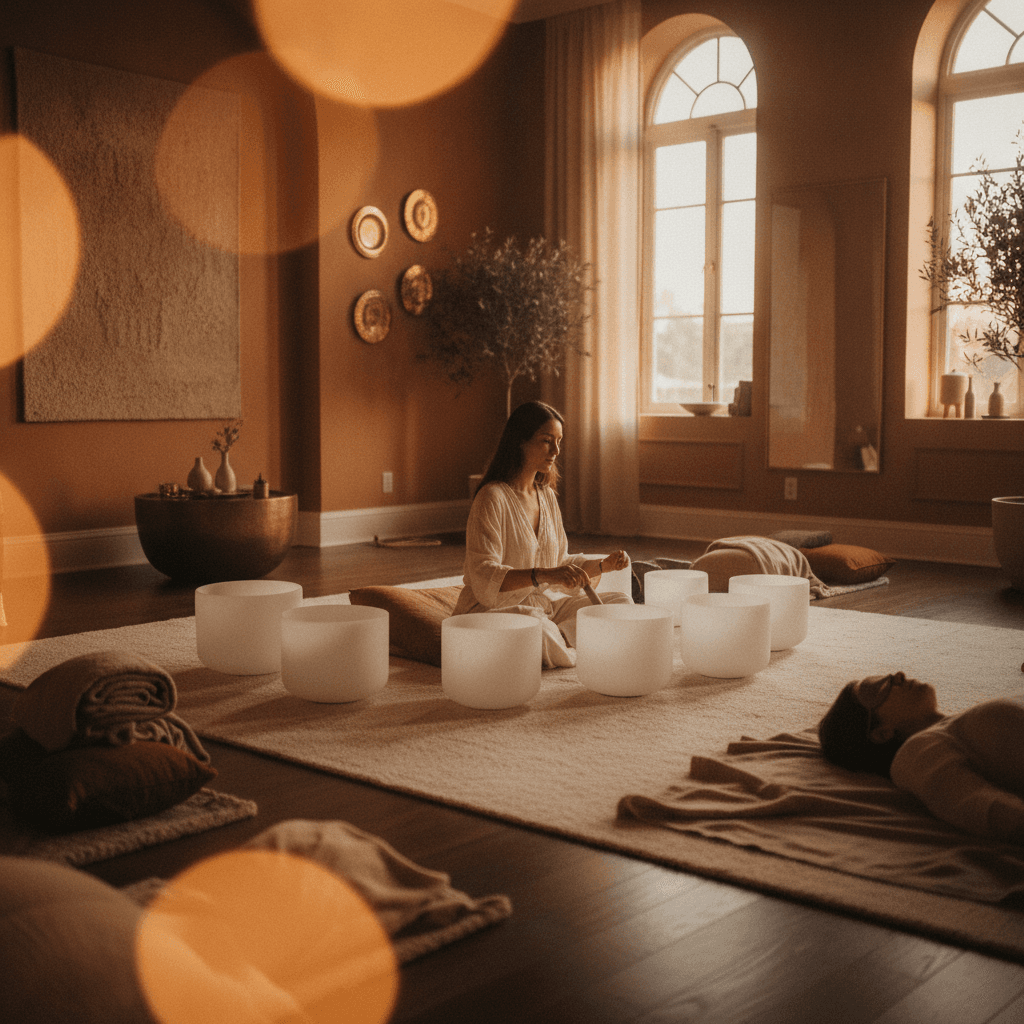
We utilize a range of exquisite instruments, each chosen for its purity of tone and resonant qualities. Crystal singing bowls, renowned for their clear, sustained vibrations, are central to our practice. Gongs offer deep, immersive sound baths that can gently guide the mind into meditative states. Chimes and tuning forks provide precise, subtle frequencies that may support the body's natural healing processes and energetic balance. These instruments are played with a delicate touch, ensuring that the sound experience is always harmonious and supportive, avoiding any abrupt or percussive elements that might inadvertently act as triggers.
A cornerstone of the Soul Art approach is the mindful and empathetic use of practitioner language. Recognizing the profound impact of perception on misophonic reactions, Larissa Steinbach and her practitioners employ language that is gentle, reassuring, and non-judgmental. We guide clients through the experience with affirmations of safety, invitations to observe sensations without attachment, and encouragement to simply be with the present moment. This verbal framing is crucial; it helps set a supportive context for the sound experience, aligning with research that suggests perception and context can profoundly influence how sounds are processed. Instead of focusing on "tolerating" or "fighting" sounds, we invite clients to explore a state of acceptance and inner peace, often using metaphors of spaciousness or gentle flow to describe their internal landscape.
Through this unique blend of resonant frequencies and compassionate guidance, Soul Art aims to support clients in cultivating a greater capacity for emotional regulation and resilience. The intention is to create an oasis where the nervous system can reset, enabling individuals to potentially reduce their reactivity to external triggers over time and find a deeper sense of well-being.
Cultivating Calm: Your Journey Towards Greater Well-being
Navigating misophonia can feel overwhelming, but embracing proactive steps rooted in understanding and self-care can make a significant difference. While sound wellness is a complementary approach, these initial steps can empower you to begin cultivating a more peaceful relationship with your sonic environment. Remember, the journey towards greater sensory comfort is a personal one, and even small steps can lead to meaningful changes.
Here are some practical next steps you can implement today to support your well-being:
- Become a Gentle Observer of Your Triggers: Without judgment or obsession, begin to notice when and where your misophonia triggers arise. Understanding patterns – certain sounds, specific environments, or even your own emotional state – can provide valuable insights. This awareness is the first step toward developing strategies for managing your reactions.
- Explore Mindful Listening in Safe Spaces: Start with sounds you find neutral or pleasant, such as natural sounds or gentle music. Practice focusing your attention on these sounds without judgment, allowing your nervous system to experience a sense of ease. Gradually, this practice may extend to cultivating a more neutral response to a wider range of sounds, always in a controlled and supportive environment.
- Prioritize Nervous System Regulation: Misophonia often keeps the nervous system in a state of hyper-alertness. Incorporate daily practices that promote relaxation, such as deep breathing exercises, gentle stretching, or short periods of quiet contemplation. These activities can help to soothe your nervous system and build resilience against future triggers.
- Investigate Complementary Wellness Practices: Explore sound wellness, mindfulness, or gentle movement practices like restorative yoga. Many people report that these approaches, focused on holistic well-being and stress reduction, may support their ability to manage misophonia symptoms. Always consider these as complementary to any medical advice you may be receiving.
- Seek Understanding and Empathy: Share your experiences with trusted friends, family, or support groups. Acknowledging your feelings and being understood can significantly reduce feelings of isolation and stress. Remember, you are not alone in this experience.
These initial steps are designed to empower you with tools for self-care and to support your journey towards greater sensory harmony. Ready to explore a deeper path to calm?
Bookings Coming Soon
Soul Art is still in preparation. Session details and booking will be published here after launch.
Coming Soon
In Summary: A Path to Sonic Serenity
Misophonia, a condition characterized by intense emotional and physiological reactions to specific sounds, is increasingly understood through the lens of neuroscience, involving altered brain activity in the auditory cortex, salience network, and emotional processing regions. Research highlights that triggers are not merely acoustic but deeply influenced by perception and context. Empathetic practitioner language and a focus on nervous system regulation are paramount in supporting individuals.
Soul Art, under the guidance of Larissa Steinbach, offers a unique sound wellness experience designed to create a haven of calm, utilizing gentle, resonant instruments and mindful communication. This approach aims to support individuals in managing their reactions to triggers and cultivating inner peace. By exploring complementary wellness practices and adopting self-care strategies, a path towards greater sensory harmony and overall well-being is indeed possible. We invite you to experience the transformative potential of sound wellness.
Wellness Disclaimer: This article is for educational and informational purposes only. It does not constitute medical advice, diagnosis, or treatment. Soul Art Dubai provides non-medical wellness experiences focused on relaxation, stress management, and general wellbeing. Sound wellness is a complementary practice and should not replace professional medical care.
Related Articles

Empowered Choices: The Art of Clarity Without Overexplaining

Unveiling the Power: Photosensitivity & Visuals in Sound Sessions
The Subtle Art of Slow Transitions: Guiding Your Brain to Calm