The Art of Proximity: Distance & Volume in Private Sound Sessions
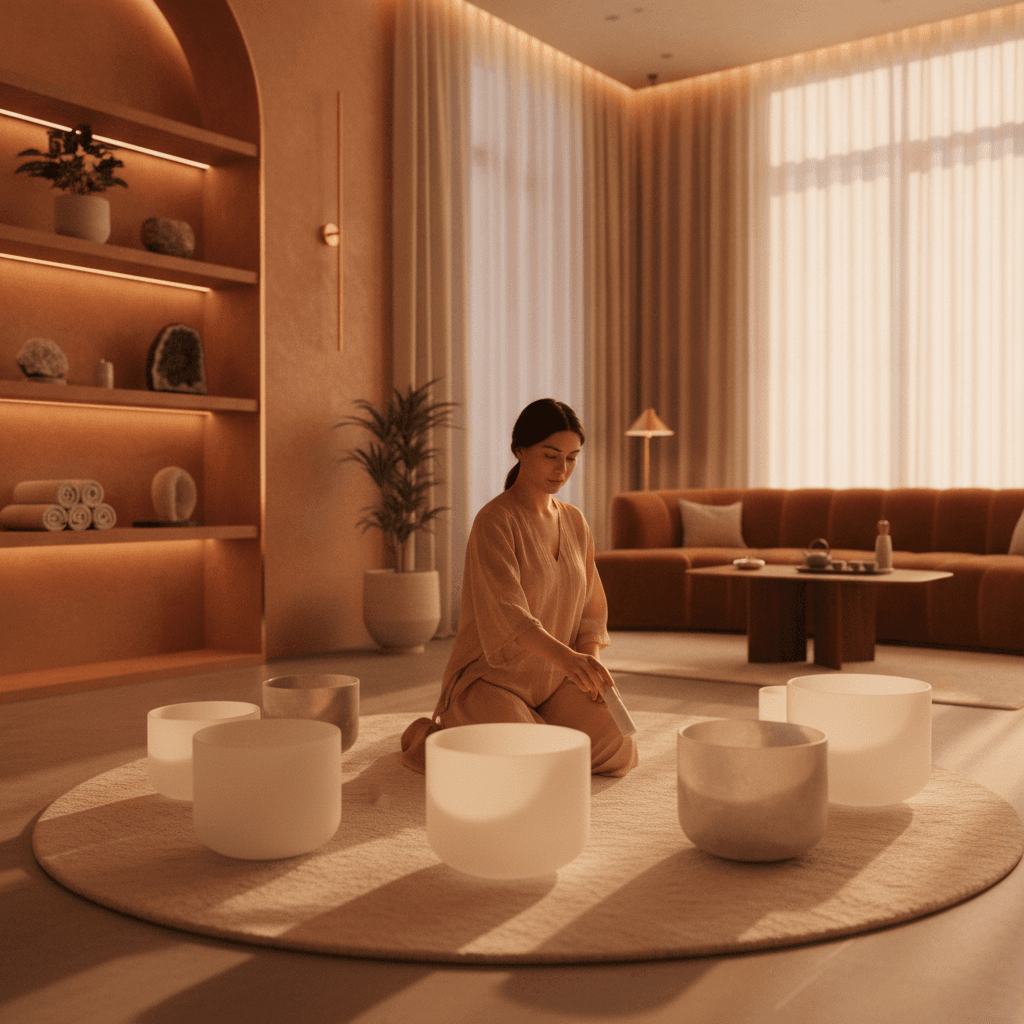
Key Insights
Explore how precise instrument distance and volume optimize deep relaxation and wellness in Soul Art's private sound sessions with Larissa Steinbach.
The Art of Proximity: How Instrument Distance and Volume Transform Private Sound Sessions
Have you ever considered that the precise distance of a singing bowl from your body, or the subtle shift in volume of a gong, could dramatically alter your experience of sound wellness? In the nuanced world of sound healing, these seemingly minor adjustments are, in fact, pivotal. They dictate not only what you hear but, more importantly, what you feel at a cellular level, profoundly influencing your journey towards deep relaxation and inner balance.
At Soul Art, Dubai's premier sound wellness studio, founded by Larissa Steinbach, we delve into the sophisticated interplay of instrument distance and volume in our private sound sessions. This article will explore the scientific underpinnings of these elements, demonstrating how their mindful application can unlock unparalleled benefits for your mental and physical wellbeing. Prepare to understand why precision in sound delivery is not just an art, but a science, guiding you to a greater state of serenity.
The Science Explained
Sound wellness is a profound practice that leverages specific frequencies and vibrations to encourage a state of deep relaxation and physiological recalibration. The effectiveness of these sessions hinges significantly on how sound waves interact with the body, a process intricately tied to both the proximity of instruments and their dynamic volume. This involves a complex interplay between auditory perception and vibroacoustic sensation.
Sound Perception and Brainwave Entrainment
Our auditory system processes sound waves, which are then transmitted to the brain. Different frequencies and volumes can influence our brainwave patterns, a phenomenon known as brainwave entrainment. For instance, gentle, rhythmic sounds, often delivered at a moderate distance, can encourage the brain to shift from beta (alert, waking state) into alpha (relaxed, reflective state) and theta (deep relaxation, meditative state) waves. Preliminary studies indicate that even a few minutes of pairing music and mindfulness can help facilitate these shifts.
When instruments like gongs are played, creating an all-enveloping sound stream, the brain receives a rich tapestry of frequencies. The "Science Behind Sound Therapy" from the Wall Street Journal notes that calming music activates areas of the brain that help with social information processing, contributing to feelings of connection and well-being. The consistent, yet varied, soundscape from instruments placed at an optimal distance allows the brain to easily follow and synchronize with these therapeutic frequencies, promoting a sense of peace and reducing mental chatter.
Vibrational Resonance and the Body
Beyond what we hear, sound also creates physical vibrations that the body can feel. This vibroacoustic therapy involves the transmission of low-frequency sound waves directly into the body. Research has shown that these vibrations can penetrate into cells and molecules, influencing physiological processes. The closer an instrument is to the body, the stronger and more direct this vibrational transfer becomes, leading to a more pronounced tactile experience.
For example, when a practitioner brings a singing bowl or tuning fork close to the body – perhaps an inch away from the forehead or over specific energy centers – the participant can feel the waves penetrating strongly. This direct vibrational exposure is distinct from simply hearing the sound from a distance. The reference from "How To Do A Sound Healing Session" highlights this, stating, "I do need to maintain proximity otherwise at a certain distance she'll hear it but she won't really feel the waves anymore." This tactile dimension is crucial for deep cellular engagement, offering a unique avenue for stress reduction and physical comfort.
The Autonomic Nervous System and Healing Frequencies
The autonomic nervous system (ANS), responsible for involuntary bodily functions, has two main branches: the sympathetic (fight-or-flight) and parasympathetic (rest-and-digest). Sound wellness practices aim to activate the parasympathetic nervous system, leading to a cascade of beneficial physiological changes. Studies from MIT have even shown that exposure to specific frequencies, such as 40 Hz light and sound, may reduce hallmarks of certain pathologies through "gamma entrainment using sensory stimulation" (GENUS).
The choice of instrument and its delivery, encompassing both distance and volume, plays a significant role in this activation. Gentle, sustained tones at a moderate volume and distance can soothe the nervous system, while localized, focused vibrations from instruments held close may target specific areas, inducing a localized relaxation response. A comprehensive scoping review found that 40 Hz was a commonly used frequency in vibroacoustic therapy, with sessions typically ranging from 20-45 minutes. This tailored application of sound and vibration is a key aspect of personalized sound wellness, promoting a holistic state of well-being.
How It Works in Practice
In a private sound session, the practitioner acts as a conductor, orchestrating a symphony of frequencies tailored to the individual. The deliberate manipulation of instrument distance and volume transforms the session from a mere listening experience into a profound, full-body immersion. This personalized approach allows for a highly adaptive and impactful wellness journey.
Crafting Tailored Sonic Fields
Practitioners select a diverse array of instruments, such as gongs, singing bowls, tuning forks, and chimes, each offering unique tonal qualities and vibrational profiles. The number of instruments played, as noted in MDPI's "Sound Healing: Mood, Emotional, and Spiritual Well-Being," can depend on the venue and participant needs, but in a private setting, the focus is on bespoke application. A soft mallet on a Himalayan singing bowl creates lower, more sustained sounds, while a firmer mallet brings out higher frequencies. These choices directly influence the volume and character of the sound produced, which is then adjusted by the practitioner's playing style and proximity.
An example includes playing bowls by striking them with a cloth-covered mallet for approximately 95% of the time, or rubbing the rim for the remaining 5%. This variation directly impacts the intensity and timbre. The practitioner’s intuition guides these choices, ensuring the soundscape evolves in response to the client’s state, dynamically adjusting volume for an optimal experience.
Experiencing the Waves: Auditory and Tactile Engagement
The magic of personalized sound sessions lies in the dual experience of hearing and feeling. When gongs are played, perhaps from several feet away, they create an "all-enveloping sound stream," washing over the body and inducing a collective vibration. This allows for auditory immersion that can guide the brain into deeper meditative states.
However, the close application of instruments like tuning forks or singing bowls provides a direct, tactile sensation that bypasses pure auditory processing. When a tuning fork is brought close to meridians or acupressure points, the vibrations penetrate "strongly," allowing the individual to "feel the waves." This direct resonance is powerful. The YouTube source, "How To Do A Sound Healing Session," underscores this: "when I bring this instrument close to her body she'll begin to feel these vibrations penetrating strongly... at a certain distance she'll hear it but she won't really feel the waves anymore." The warmth and intensity experienced from just a few inches away from the ears, for instance, is vastly different from distant sounds.
Beyond Auditory Perception
The precise distance and volume allow the practitioner to target specific areas of discomfort or tension identified by the client. Prolonged exposure to these localized vibrations may support cellular relaxation and energetic release. This targeted approach is a cornerstone of effective sound wellness, moving beyond a general "sound bath" to a deeply personalized vibrational massage.
"The many healing and revealing aspects of sound therapy and sound healing are experiential in nature. If you wish to explore the positive experience... in person..., we offer both."
The ability to feel the vibrations, not just hear them, is what transforms sound wellness into a truly holistic experience. It underscores the importance of a skilled practitioner who can intuitively navigate these parameters to create a truly therapeutic environment, where sound serves as a conduit for profound internal shifts.
The Soul Art Approach
At Soul Art, Larissa Steinbach’s methodology is rooted in the understanding that each individual’s journey to well-being is unique. This bespoke philosophy is particularly evident in how instrument distance and volume are meticulously managed during private sound sessions. Larissa and her expert team go beyond a generalized sound bath, crafting an intimate and highly responsive sonic landscape tailored to your specific needs.
Larissa's expertise involves a deep intuitive connection with both the instruments and the client. She carefully selects from a diverse collection of resonant tools, including rare Himalayan singing bowls, powerful gongs, precision tuning forks, and gentle chimes. The choice of instrument, coupled with the exact volume and distance it is played at, is never arbitrary. Instead, it is a dynamic process, responsive to your energy and verbal feedback throughout the session.
For instance, a client seeking profound grounding might experience the deep, enveloping vibrations of a large gong played at a carefully controlled volume from a specific distance, allowing the low frequencies to permeate their being. Conversely, someone needing gentle mental clarity might have tuning forks applied with subtle volume closer to their energy centers, focusing the vibrational input without overwhelming the auditory senses. Larissa Steinbach understands that the "tones are much more pronounced close to the ears," allowing her to optimize for specific outcomes.
What makes the Soul Art method unique is this personalized dance between client and sound. Larissa fine-tunes the sonic environment, modulating volume with different mallets – soft for lower, resonant tones; firm for brighter, higher frequencies – and adjusting instrument distance to ensure maximum vibrational absorption and comfort. This meticulous attention to detail ensures that each private sound session at Soul Art is not just heard, but deeply felt, promoting an unparalleled sense of harmony and restorative peace.
Your Next Steps
Embracing the profound benefits of tailored sound wellness is a powerful step towards enhanced well-being. Understanding the intricate role of instrument distance and volume empowers you to appreciate the depth of what a professional sound session can offer. Here are some practical steps you can take to integrate these insights into your wellness journey:
- Seek Out Private Sessions: While group sound baths are wonderful, consider a private session to experience the truly personalized application of instrument distance and volume. This allows for a deeper, more targeted experience.
- Communicate with Your Practitioner: Share your intentions, any areas of tension, or your desired level of sound intensity. An experienced practitioner, like those at Soul Art, can then adjust their technique accordingly.
- Pay Attention to Sensations: During a session, notice not just what you hear, but also where and how you feel the vibrations in your body. This heightened awareness enhances your connection to the process.
- Explore Different Instruments: Recognize that various instruments offer distinct vibrational qualities. A tuning fork held close provides a different sensation than a gong played at a distance. Experimenting can help you discover what resonates most with you.
- Integrate Sound into Daily Life: Even simple practices like listening to calming music or using a small singing bowl for a few minutes can support nervous system regulation and help you maintain a state of relaxed awareness. Research shows that even short sessions can increase parasympathetic nervous system activity.
Ready to restore your nervous system and discover deep relaxation through the precise application of sound? At Soul Art, Larissa Steinbach and her team are dedicated to crafting a sound experience that resonates deeply with your individual needs, offering a unique path to holistic well-being.
In Summary
The meticulous control over instrument distance and volume is not merely an artistic choice but a scientifically grounded approach at the heart of effective sound wellness. It dictates whether sound is an auditory experience, a deep cellular vibration, or a harmonious blend of both, profoundly influencing brainwave states and nervous system regulation. This personalized precision, expertly applied in private sound sessions, supports deep relaxation, stress reduction, and a return to inner balance. By understanding and appreciating this nuanced application, you can unlock a truly transformative path to holistic well-being. Soul Art invites you to experience this powerful, tailored approach for yourself.
Bookings Coming Soon
Soul Art is still in preparation. Session details and booking will be published here after launch.
Coming Soon
Wellness Disclaimer: This article is for educational and informational purposes only. It does not constitute medical advice, diagnosis, or treatment. Soul Art Dubai provides non-medical wellness experiences focused on relaxation, stress management, and general wellbeing. Sound wellness is a complementary practice and should not replace professional medical care.
Related Articles
Transform Your Meetings: Corporate Gong Baths by Soul Art
Harmonic Resonance: Couples Crystal Bowl Sessions for Shared Stillness
Voice, Bowls & Gong: Harmonizing Sound Layers Responsibly