Intention Setting Without Forcing: Achieve Goals with Peace

Key Insights
Learn how to set powerful intentions without attachment to outcomes. Explore the science, practice mindful living, and embrace authentic change at Soul Art Dubai with Larissa Steinbach.
The Art of Intentional Living: Setting Intentions Without Forcing Outcomes
Do you often find yourself caught in a cycle of striving, where ambitious goals lead to stress and disappointment if specific outcomes aren't met? It's a common human experience to equate success solely with external achievements, yet this very focus can paradoxically hinder our progress and diminish our inner peace. What if there was a more compassionate, sustainable way to shape your reality, one that invites growth without the rigid grip of expectation?
This article delves into the profound practice of setting intentions, not as a demanding directive, but as a gentle alignment with your deepest values. We’ll explore the compelling science behind this mindful approach, discover practical ways to integrate it into your daily life, and reveal how Soul Art, under the guidance of Larissa Steinbach, cultivates this delicate balance. Prepare to shift from a mindset of forcing to one of flowing, embracing a path where your actions are rooted in meaning, and true well-being naturally unfolds.
The Neuroscience & Psychology of Intentional Living
Understanding how intention setting impacts our brain and behavior reveals why it's a powerful tool for personal transformation. This isn't just a spiritual concept; it's a sophisticated interplay of cognitive and psychological processes that can genuinely reshape our experience. From focusing our attention to automating positive actions, intentions offer a unique pathway to sustained change and inner peace.
The Brain's Filtering System: The Reticular Activating System (RAS)
At the core of how intentions begin to manifest is the brain’s Reticular Activating System (RAS). This neural network acts as a crucial filter, sifting through the constant stream of sensory information and alerting us to what is relevant based on our beliefs, thoughts, and intentions. When you consciously set an intention, you essentially program your RAS to highlight opportunities and resources in your environment that align with that intention.
This means that instead of merely "wishing," you are actively directing your brain's attention, making you more receptive to information and experiences that can support your desired state of being. The RAS brings what you focus on into your conscious awareness, making you more likely to notice and act upon what truly matters to you.
Values as Enduring Motivators: Intrinsic vs. Extrinsic Drives
Intentions distinguish themselves from conventional goals by emphasizing intrinsic values rather than purely external rewards. Research in psychology consistently shows that behavior change is more sustainable when actions are connected to these deep-seated personal meanings. When your motivation stems from within—from a desire to embody a specific quality or live by a core principle—you are far more likely to persist through challenges.
This focus on values provides a resilient foundation for change. Unlike external rewards, which can be fleeting or unsatisfying once achieved, values offer a continuous wellspring of motivation that nurtures long-term commitment and satisfaction. This shift reduces reliance on willpower alone, making the journey feel less like a chore and more like an authentic expression of self.
Self-Concordant Behavior & Reduced All-or-Nothing Mindset
Intentions inherently encourage self-concordant behavior, meaning actions that are deeply aligned with your personal meaning and inner self. This alignment fosters a sense of authenticity and reduces the common "all-or-nothing" mindset often associated with traditional goal-setting. When the focus is on embodying a value rather than achieving a rigid outcome, setbacks become opportunities for realignment, not failures.
For instance, if your intention is "to honor the needs of your physical body through movement," missing a workout doesn't equate to failure. Instead, it prompts the question: "What can help me realign with my intention today?" This compassionate self-inquiry replaces self-criticism, supporting mental well-being and making the journey toward your intention more forgiving and adaptable.
Automating Action: The Power of Implementation Intentions
Beyond general intentions, the scientific concept of implementation intentions provides a powerful mechanism for translating desire into consistent action. An implementation intention takes the form of "If [situation], then I will [specific response]." This pre-planned response effectively delegates action control to environmental stimuli, making it less dependent on conscious effort and willpower.
Studies indicate that forming an implementation intention can automate action control, shifting from top-down (conscious) to bottom-up (automatic) information processing. This is particularly beneficial for individuals facing challenges with self-regulation, as these "if-then" plans require fewer cognitive resources. By linking a desired action to a specific cue, you create a mental shortcut that triggers the response automatically when the situation arises, fostering consistent behavior aligned with your broader intentions.
How It Works in Practice: From Theory to Embodiment
Translating the science of intention setting into a living, breathing practice is where its true power lies. It's about shifting your internal landscape and relating to your aspirations in a way that cultivates peace, presence, and genuine fulfillment. This isn't about passive wishing, but an active, mindful engagement with your desired way of being.
Intentions vs. Goals: A Fundamental Shift
The primary distinction between intentions and goals is crucial for understanding this practice. Goals are often externally driven, focused on a future outcome, and typically measurable, like "lose 5 kg in two months." Intentions, however, are qualitative, present-moment oriented, and about how you want to be or how you want to show up in the world. An intention might be "honoring the needs of my physical body through joyful movement" or "dedicating myself to nurturing meaningful connections."
With intentions, the emphasis isn't solely on the outcome or timeframe, but on aligning your daily actions with your core values in a mindful, compassionate way. This heartfelt practice requires you to "feel into your body" rather than just think, fostering deep self-exploration and aligning your inner state with your external reality. It moves you from worrying about results to truly enjoying the journey.
Cultivating Non-Attachment: The Freedom to Flow
A core principle of setting intentions without forcing outcomes is non-attachment. This means doing your best and aligning with your intention, but releasing your rigid grip on a specific result. As Dr. Sonja Jahn wisely notes, "when you are no longer anxious about the result and you let go of your attachment to the fruits of your actions, your attention can fall back into the present moment."
This practice, often referred to as "High Intention, Low Attachment," allows you to remain inspired and engaged without the burden of disappointment if things don't unfold exactly as envisioned. It invites trust in the timing and a willingness to embrace the present moment, knowing that your worth is not defined by any single achievement or setback. This perspective opens you to possibilities, sometimes even revealing better outcomes than you originally anticipated.
"Instead of obsessing over a specific result, focus on the intention behind your actions. Ask yourself, 'Why am I doing this?' rather than 'What will I get from this?'" — Akosua Dardaine
Crafting Your Intention: Simple, Value-Based, and Flexible
Once you have clarity on what genuinely matters to you, translate it into a concise, present-tense statement. Effective intentions are:
- Simple: Easy to remember and focus upon. Avoid complexity that dilutes power.
- Value-based: Rooted in your core principles and what you want to embody.
- Flexible: Not rigid or demanding perfection; allows for adaptability.
- Oriented towards behavior, not perfection: Focus on how you act or feel, not an unachievable ideal.
- Positive: Frame your intentions positively (e.g., "I intend to embrace calm" instead of "I will stop being stressed").
Examples include: "I choose to prioritize rest without guilt," "I am committed to communicating honestly and kindly," or "I intend to move through my days with steadiness and self-respect." If an intention feels heavy or overwhelming, it may be too outcome-focused. Ensure it authentically reflects your values, not external pressures.
Daily Reconnection & Small Actions: Embodiment in Every Moment
Setting an intention is not a one-time event; it's an ongoing practice of returning to your chosen course. Spend a few moments with your intention most days, not to "wish" for an outcome, but to reconnect with its essence. Visualize what embodying this intention could look like in your life.
Regularly ask yourself:
- "What small action can I take today that aligns with this intention?"
- "How can I embody this intention now in my life?"
This continuous re-engagement keeps your intention alive and integrated into your daily decisions and interactions. It fosters a mindful way of living, ensuring your actions are consistently aligned with your broader life purpose and priorities, leading to profound personal development and a deeper engagement with life itself.
The Soul Art Approach: Harmonizing Intention and Release
At Soul Art, Dubai's premier sound wellness studio, Larissa Steinbach intuitively guides individuals through experiences that deeply resonate with the principles of intentional living without attachment. Her approach seamlessly weaves scientific understanding with ancient wisdom, offering a unique pathway to clarity, presence, and profound relaxation.
Larissa Steinbach understands that true transformation begins within. Her methodology at Soul Art is designed to create a safe and resonant space where clients can naturally release the mental grip of expectations and connect with their authentic selves. The immersive power of sound is a key facilitator in this process, enabling a state of deep meditation and introspection that often proves elusive in daily life.
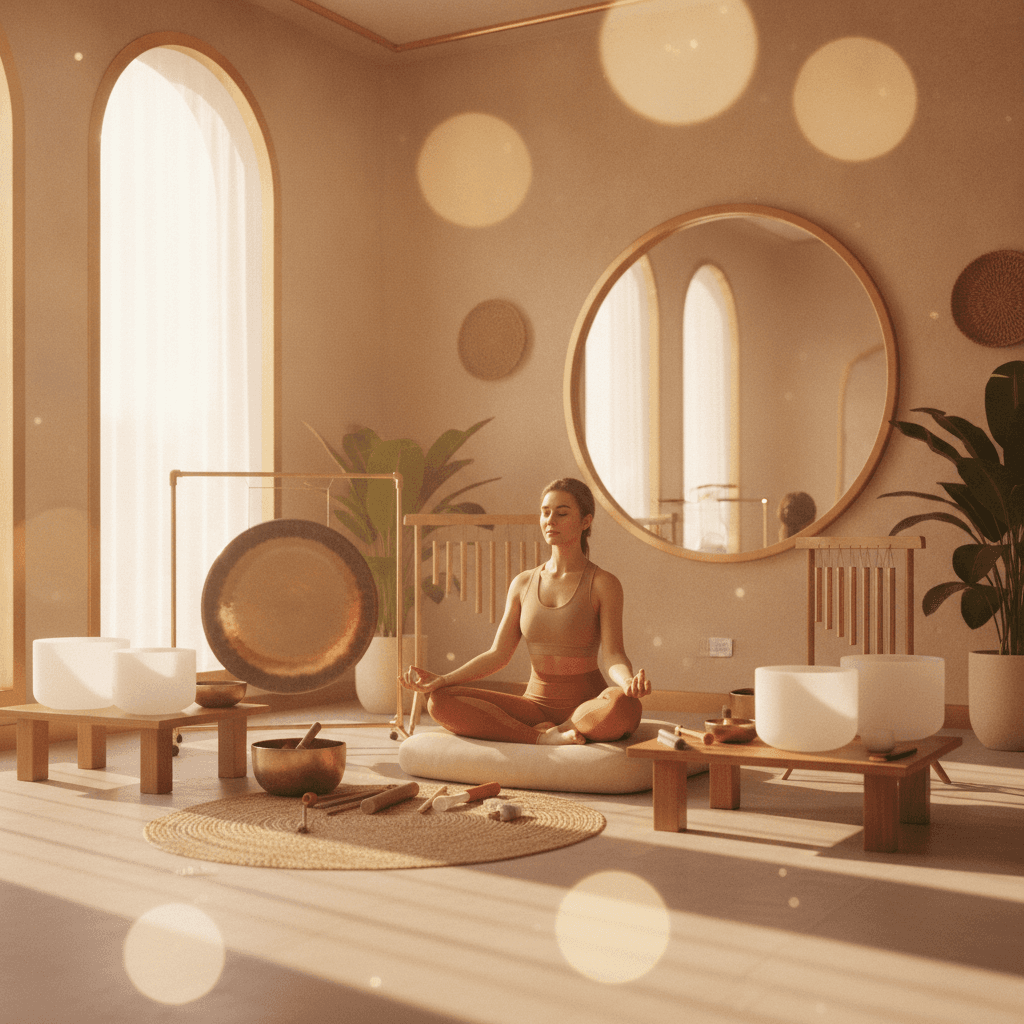
The signature Soul Art sound baths utilize a carefully curated selection of instruments, including resonant crystal singing bowls, deeply vibrating gongs, and other therapeutic tools. These instruments produce specific frequencies and harmonics that may support the nervous system in shifting into a parasympathetic state, often associated with rest and repair. In this relaxed state, the mind's incessant chatter about future outcomes quiets, opening a portal to intuitive clarity.
Larissa's expertise lies in guiding participants to articulate their intentions during the initial phase of a session. She encourages clients to focus on states of being—such as "I have faith in my inner wisdom" or "I welcome my emotions in their entirety"—rather than rigid, external achievements. As the sound journey unfolds, the deep vibrational therapy helps to quiet the analytical mind, allowing these intentions to settle into the body on a cellular level, beyond conscious forcing.
The unique Soul Art method emphasizes the release of attachment to how an intention will manifest. The ethereal soundscapes encourage a surrender to the present moment, a gentle invitation to "let go with gratitude," as referenced in ancient wisdom. This creates an environment where intentions can be sown with clarity and then released into the energetic field, trusting that what is meant to unfold will do so in its own perfect timing, or that something even better may emerge. It's a sophisticated yet deeply empathetic approach to self-discovery and well-being.
Your Next Steps: Practical Steps for Mindful Intention Setting
Embracing the practice of setting intentions without forcing outcomes is a journey of self-discovery and ongoing refinement. Here are actionable steps you can implement today to cultivate this powerful shift in your own life, moving towards greater peace and alignment.
Practical Steps for Mindful Intention Setting
- Reflect on Your Values: Before crafting an intention, take time to genuinely reflect on your core values. What truly matters to you? What qualities do you wish to embody? Journaling or quiet meditation can help clarify these intrinsic motivators.
- Craft Simple, Positive Intentions: Formulate your intentions as short, present-tense, positive statements. Focus on what you want to cultivate, not what you want to avoid. Ensure they feel authentic and empowering, rather than restrictive or performance-driven.
- Practice Daily Reconnection: Make it a habit to revisit your intention each morning or before significant activities. Close your eyes, take a few deep breaths, and silently repeat your intention, allowing yourself to feel its essence. This isn't about wishing; it's about re-aligning.
- Embrace the Journey, Not Just the Outcome: Consciously shift your focus from rigid expectations about results to appreciating the process and the small steps you take. If things don't go as planned, practice self-compassion and ask, "How can I realign with my intention now?"
- Cultivate Non-Attachment: After setting your intention and taking aligned action, practice releasing your grip on a specific outcome. Trust the timing of life and remain open to possibilities, including those you hadn't anticipated. This "high intention, low attachment" mindset fosters inner peace regardless of external circumstances.
Remember, this wellness practice is about cultivating a mindful way of living, inviting curiosity and a sense of experimentation into your journey. It supports personal development by encouraging you to connect to your chosen course without the pressure of a required result.
Bookings Coming Soon
Soul Art is still in preparation. Session details and booking will be published here after launch.
Coming Soon
In Summary
Setting intentions without forcing outcomes is a transformative wellness practice that shifts our focus from rigid external achievements to cultivating an authentic inner state. By understanding the science behind the brain's filtering systems and the power of intrinsic values, we can craft intentions that genuinely resonate. This approach emphasizes presence, non-attachment, and self-compassion, transforming setbacks into opportunities for realignment.
Larissa Steinbach's Soul Art studio masterfully integrates these principles through immersive sound wellness experiences, helping individuals release the grip of expectation and connect with their deepest desires. By consciously choosing your intentions, revisiting them mindfully, and then releasing attachment to specific results, you invite a more peaceful, aligned, and fulfilling existence. Embrace this sophisticated yet accessible path to well-being and discover the freedom that comes with trusting the journey.
Related Articles

Unlock Group Harmony: The Science of Small Group Sound Baths at Soul Art

Harmonize Together: The Science of a Couples Sound Bath

Harmonizing Together: Can You Share a Sound Bath with a Friend at Soul Art?