Evening Sound Rituals: A Guide to Deep Rest
Key Insights
Discover the science of evening sound rituals. Learn how to use curated frequencies and simple practices to signal your brain for sleep, reduce stress, and improve rest.
Have you ever laid in bed, body exhausted but mind racing, scrolling through the day’s unfinished business? In our hyper-connected world, the transition from the high-alert state of our workday to the deep relaxation required for sleep has become one of our greatest wellness challenges. Many of us simply expect our brains to have an "off" switch, but neuroscience tells us a different story. The truth is, preparing for rest is an active process—a ritual, not a command.
This journal entry explores the science-backed power of creating an intentional evening ritual, with a special focus on the profound role of sound. You will learn how simple, consistent practices can signal to your nervous system that it is safe to rest. We will delve into the research, connect theory to practice, and offer actionable steps to help you transform your nights from restless to restorative, reclaiming sleep as the sacred, healing practice it is meant to be.
The Science of Winding Down
Creating an effective evening ritual isn't about following a trend; it's about communicating with your own biology. Modern research has illuminated the specific neurological and physiological shifts that must occur for us to fall asleep easily and sleep deeply. Understanding this science is the first step toward crafting a personal practice that truly works.
The 90-Minute Rule: Aligning with Your Circadian Rhythm
What you do in the hours before bed sets the stage for the entire night. Researchers from Oxford University's Sleep & Circadian Neuroscience Institute have identified that a 90-minute "wind-down" period is optimal for preparing the body for sleep. This timeframe is crucial for a fundamental biological transition.
Throughout the day, our bodies are often dominated by the sympathetic nervous system—our "fight or flight" mode, which keeps us alert, focused, and ready for action. For restorative sleep, we must shift into the parasympathetic nervous system, also known as the "rest and digest" state. This 90-minute window allows the body sufficient time to down-regulate, lower cortisol levels, and begin producing melatonin, the hormone that governs our sleep-wake cycle.
Brain Dumping: The Surprising Power of a To-Do List
It may sound counterintuitive to think about your to-do list before bed, but a study from Baylor University revealed a fascinating insight. Participants who spent five minutes writing down tasks they needed to remember for the coming days fell asleep an average of 9 minutes faster than those who wrote about what they had already accomplished.
This practice, often called a "brain dump," works by externalizing your mental load. Instead of your brain clinging to these unresolved thoughts and anxieties, you effectively give them a place to live outside of your head. This act of "closing the tabs for the night" signals to your mind that it can release its problem-solving duties and enter a state of rest.
Sound as a Neurological Cue
Our sense of hearing is one of the most powerful tools for influencing our state of mind. The brain processes auditory information faster than visual information, sending signals directly to the limbic system, the region responsible for emotion and memory. This is why a particular song can instantly transport you back in time or change your mood.
When we use sound consistently within a bedtime ritual, we are creating a powerful neurological association.
- Classical Conditioning: After a few weeks, your brain learns to associate a specific sound with the feeling of relaxation and the intention to sleep.
- Sensory Safety: As research from UCSF on deep rest highlights, sensory inputs like sound can send powerful signals of safety to the nervous system, turning off our subtle, chronic anticipation of threats that keep us in a low-grade state of stress.
- Consistency is Key: Whether it's the gentle hum of a tuning fork, the resonance of a singing bowl, or a consistent nature soundscape, the repetition of the sound cue is what builds its effectiveness over time.
The Frequency of Relaxation
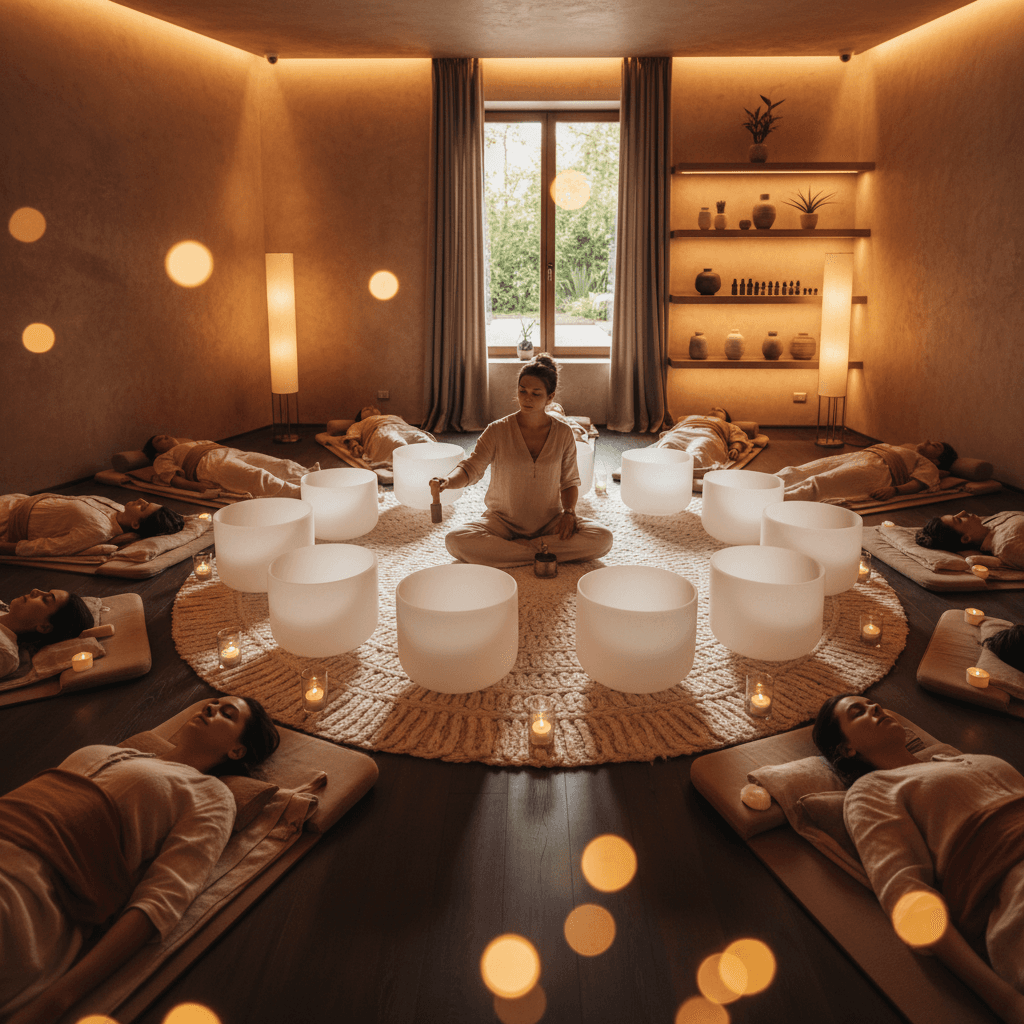
The impact of sound goes beyond simple association. Sound healing research, while still an emerging field, has produced promising results. Studies published in journals like Psychology Today have explored the effects of sound baths, particularly those using Tibetan singing bowls.
This research indicates that specific vibrational frequencies can have a measurable impact on the body and mind. Participants in these studies often report significant reductions in tension, anxiety, and other negative mood states. The resonant sounds are thought to encourage the brain to shift into slower brainwave states, such as Alpha (associated with calm relaxation) and Theta (linked to deep meditation and the state just before sleep).
"The quality of your sleep is a direct reflection of the quality of your pre-sleep hour. By consciously creating a sanctuary of sound and stillness, you are not just preparing for sleep—you are engaging in a profound act of self-regulation and care."
From Theory to Tranquility: Crafting Your Evening Ritual
Understanding the science is enlightening, but the true transformation happens when you integrate these principles into a tangible, personal practice. An evening ritual is a multi-sensory experience that guides you, step by step, from the busyness of the day to the quiet of the night. It is a dialogue with your nervous system, reassuring it that the day is done and it is safe to surrender to rest.
Imagine your last 90 minutes of the day unfolding like this:
Step 1: The Wind-Down Commences (90 minutes before bed) This is the moment you draw a line in the sand. All screens—phones, tablets, televisions—are put away. The blue light from these devices is known to suppress melatonin production, directly interfering with your sleep cycle. Instead, you dim the lights in your home, signaling the end of the day to your internal clock. This simple environmental change begins the cascade of physiological events that lead to sleep.
Step 2: Mental De-Cluttering (75 minutes before bed) Take five to ten minutes with a physical journal and pen. This is your "brain dump." Following the research, focus on writing down everything you need to do tomorrow. Get it all out—the emails, the errands, the reminders. You might also incorporate a gratitude practice, as studies from the Journal of Positive Psychology suggest this can shift your mindset away from stress and problem-solving, further calming the nervous system.
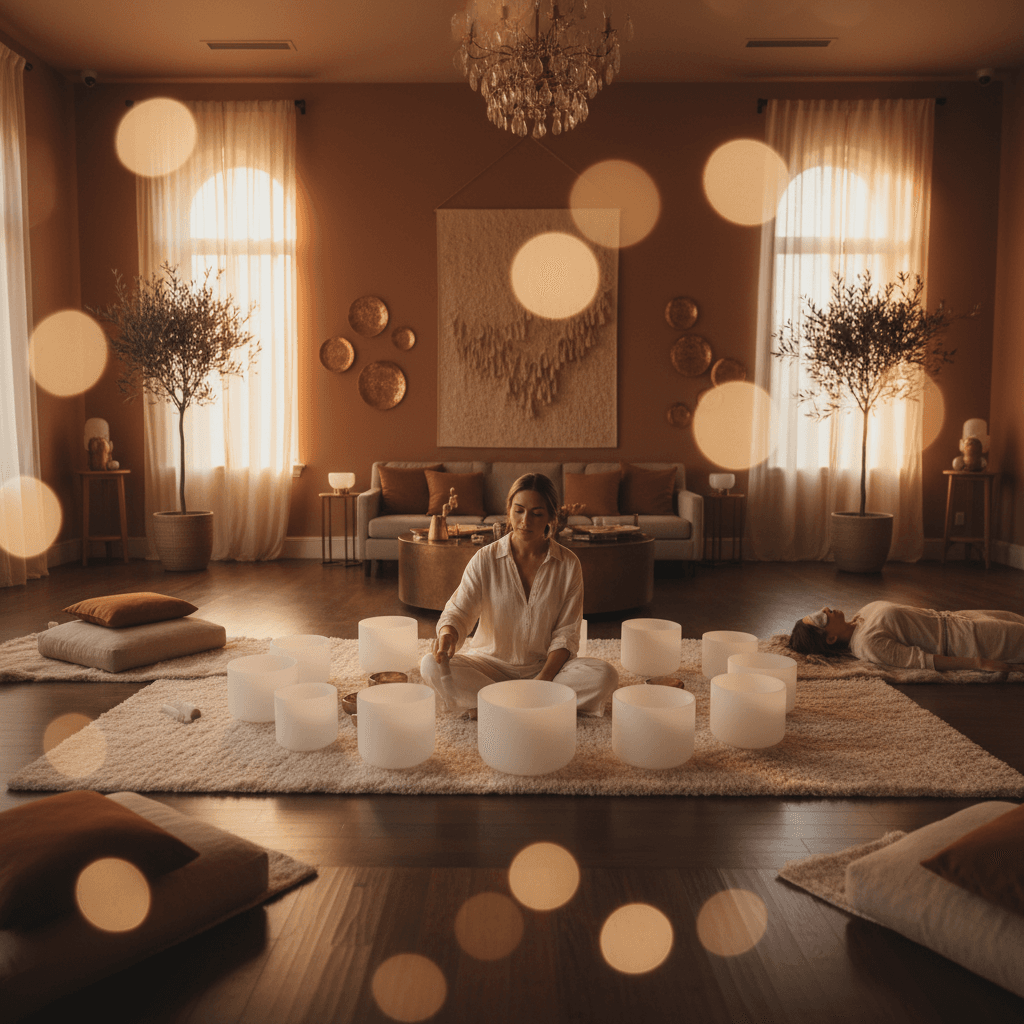
Step 3: Introduce Your Sound Cue (60 minutes before bed) Now, you introduce your chosen sound. This should be a distinct, intentional moment. Perhaps you gently strike a low-frequency tuning fork and place it on your sternum, feeling the subtle vibration resonate through your body. Or maybe you play a single, resonant note on a crystal singing bowl, allowing the sound to fill the room and wash over you. The key is to be fully present with the sound. Close your eyes. Notice the vibrations. Let the frequency be the anchor that brings your awareness fully into the present moment.
Step 4: Layering Sensory Cues (The final hour) With the primary sound cue established, you can layer in other relaxing sensory rituals that reinforce the message of rest. This could be a warm bath, a simple skincare routine, or reading a few pages from a physical book. According to a study by Sussex University, reading for as little as six minutes can reduce stress levels by up to 68%. Each consistent action deepens the ritual and strengthens the brain's association between this sequence and deep, restorative sleep.
The Soul Art Method: Curated Frequencies for Rest
At Soul Art, we view the evening ritual not merely as a routine, but as a sacred practice of returning to oneself. Founder Larissa Steinbach has developed a unique approach that elevates the use of sound from a simple cue to a form of deep, vibrational communication with the body.
The Soul Art method is built on the principle of intentional frequency. We understand that not all sounds are created equal. The instruments used in our studio and recommended for at-home practice—such as specific low-frequency tuning forks, alchemy crystal singing bowls, and precisely tuned chimes—are chosen for their scientifically-observed potential to guide the nervous system into a parasympathetic state.
What makes our approach distinct is the focus on curation and embodiment. We guide our clients to discover the frequencies that resonate most deeply with their individual constitution. During a session with Larissa Steinbach, you don’t just listen to sound; you learn to feel it and use it as a tool for self-regulation. We combine ancient vibrational wisdom with a modern understanding of neuroscience to create a holistic practice that is both deeply personal and highly effective as a stress management tool.
Begin Your Ritual Tonight: Simple Steps for Deeper Sleep
You have the power to reshape your relationship with rest, starting this evening. You don’t need a full suite of instruments to begin; you only need intention and consistency. Here are a few practical steps you can implement today:
- Designate Your 90-Minute Window: Set an alarm for 90 minutes before your desired bedtime. When it goes off, commit to putting away all screens and beginning your wind-down process.
- Perform a 5-Minute "Brain Dump": Keep a notebook by your bed. Before you get under the covers, take five minutes to jot down a quick to-do list for tomorrow. Notice the feeling of release as you transfer these thoughts to paper.
- Choose a Simple Sound Cue: Begin with an accessible sound. This could be a short, high-quality recording of a singing bowl, a gentle chime sound on your phone (played once, not on a loop), or even the consistent hum of a fan. The crucial part is using the same sound at the same point in your ritual every night.
- Practice Patience and Consistency: As with any new habit, your body and brain need time to adapt. Research suggests it can take two to three weeks for your brain to fully form the new neural pathway that connects your ritual with sleep. Be patient and trust the process.
For those seeking a more immersive and guided experience to establish these powerful patterns, a personalized session at Soul Art can provide the foundation and tools you need.
Your Invitation to Restful Nights
In summary, an evening ritual is a science-backed method for signaling safety and rest to your nervous system. By consciously designing the 90 minutes before bed, you can actively shift your body from a state of high-alert stress to one of deep, parasympathetic calm.
Key pillars of this practice include mentally decluttering through journaling and, most powerfully, using sound as a consistent neurological cue. The right frequencies can help soothe the mind and prepare the body for the vital restorative work that happens during sleep. Creating this ritual is an investment in your well-being, promising not just better sleep, but more energized and balanced days. We invite you to explore the profound potential of sound at Soul Art and rediscover the peace of a truly restful night.
Bookings Coming Soon
Soul Art is still in preparation. Session details and booking will be published here after launch.
Coming Soon
Related Articles
Sound & Nutrition: Cultivating Mindful Eating in Dubai
Cold Plunge & Sound: Elevating Recovery for Mind & Body
Cryotherapy & Sound: The Ultimate Recovery Protocol