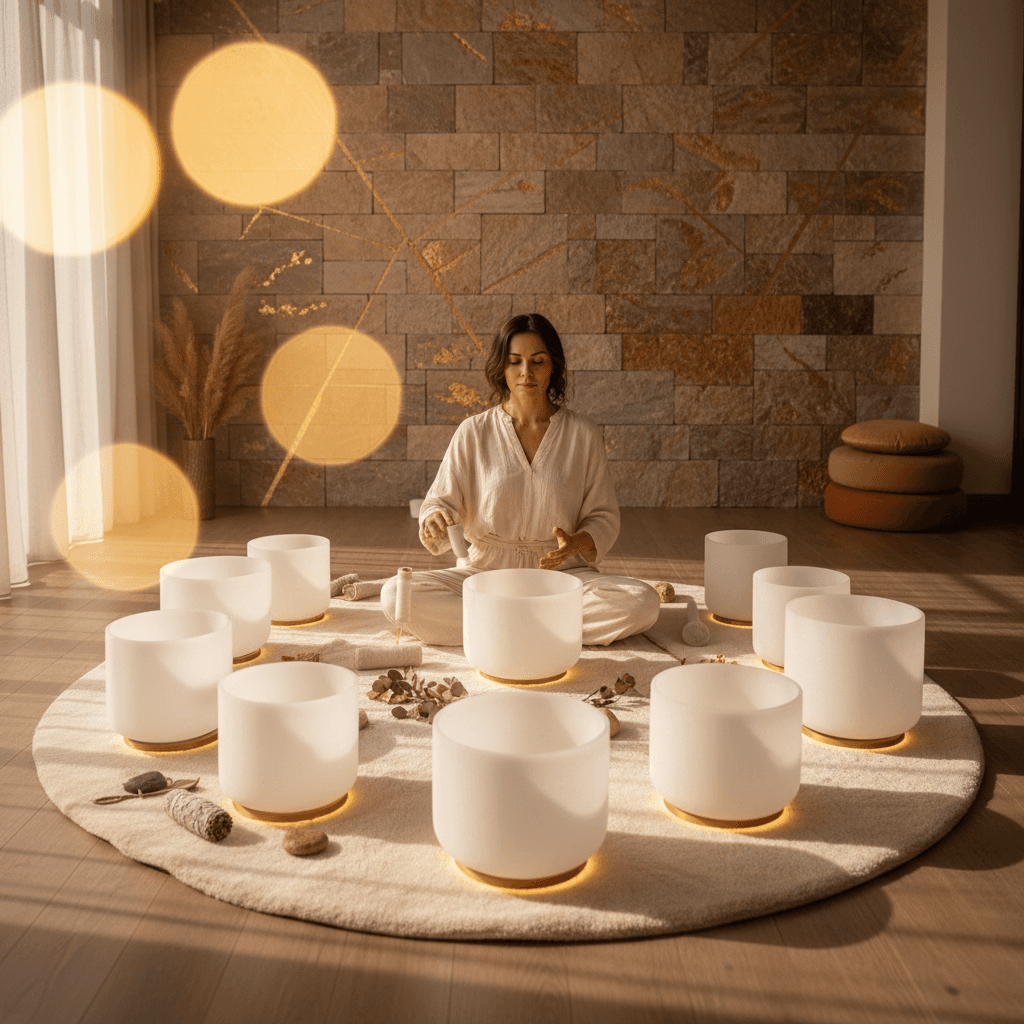
Sound Pollution's Silent Threat: Impact & Wellness Solutions
Key Insights
Explore how environmental noise impacts health, cognition, and well-being. Discover scientifically-backed solutions, including sound wellness, to restore peace and vitality.
Compelling Introduction
Imagine a world where the symphony of nature's subtle sounds is overshadowed by an relentless, unseen force. This isn't a dystopian fantasy; it's the daily reality for millions living amidst environmental sound pollution. Often underestimated compared to visible pollutants, noise is a pervasive environmental stressor with profound, yet often unnoticed, impacts on our physical and mental well-being.
At Soul Art, Dubai's premier sound wellness studio founded by Larissa Steinbach, we understand that true serenity begins with harmony, both within and without. This article delves into the scientifically-backed evidence revealing how constant noise subtly erodes our health, cognition, and peace. We will explore its pervasive effects, from cognitive decline to heightened stress, and then uncover practical, empowering solutions that can help us reclaim our sonic sanctuary and foster a deeper sense of well-being.
Understanding the silent cacophony that surrounds us is the first step toward creating a more harmonious and healthful existence. Join us as we explore the hidden threats of noise and the transformative power of intentional sound.
The Science Explained
Environmental sound pollution, defined by the World Health Organization (WHO) as unwanted sound exceeding 65 decibels (dB) during the day and 55 dB at night, is far more than a mere annoyance. It acts as a chronic stressor, subtly triggering physiological and psychological responses that can undermine our health in insidious ways. This constant auditory intrusion, from bustling city streets to the hum of household appliances, disrupts our body's natural rhythms and places a significant burden on our nervous system.
The Silent Threat to Our Minds
The impact of noise on our cognitive functions is particularly striking. A comprehensive systematic review and meta-analysis of recent evidence, including 16 new studies alongside 32 prior ones, illuminated several key findings. This research highlighted a clear association between environmental noise and impaired cognitive abilities.
For children, aircraft noise and road traffic noise have been consistently linked to challenges in learning and development. A meta-analysis of three studies revealed that reading comprehension scores in quiet classrooms were 0.80 points higher than in noisier environments. Furthermore, a one-decibel (dB) increase in environmental noise was associated with a pooled beta coefficient of -0.11 for reading and language abilities, indicating a measurable negative impact.
For adults, the picture is equally concerning.
- Cognitive Impairment: A meta-analysis found a 1.40 times higher odds (OR 1.40) of cognitive impairment in individuals aged 45 and older with greater residential noise exposure. This suggests that the prolonged exposure to everyday ambient noise can significantly contribute to a decline in mental sharpness.
- Attention and Memory: Studies indicate that environmental noise acts as a sensory stimulant, hindering crucial cognitive abilities such as attention, memory, and executive function. The brain expends extra energy attempting to filter out unwanted sounds, leaving fewer resources for focused tasks.
- Information Recall: While some context-dependent memory effects have been observed, where information is better recalled in a noisy environment if learned there, the overall evidence points to noise as a detriment to effective cognitive processing.
These findings underscore the critical importance of creating quiet spaces, particularly for learning and mental tasks, to support optimal cognitive health across all age groups.
The Body's Unseen Burden
Beyond the mind, sound pollution exerts a substantial toll on our physiological health, often without our conscious awareness. The body interprets unwanted noise as a threat, triggering the fight-or-flight response, leading to a cascade of stress hormones.
- Cardiovascular Health: Research has established a clear link between chronic noise exposure and cardiovascular issues. For every 5 dB(A) increase in night-time noise levels (Lnight), studies have shown:
- Odds Ratios (OR) for hypertension ranging from 1.06 to 1.19. This means a higher likelihood of developing high blood pressure.
- Increased Ischemic Heart Disease Mortality: A 1 dB(A) increase in night-time noise has been associated with a Relative Risk (RR) of 1.029 to 1.108 for ischemic heart disease mortality, particularly in individuals aged 65 and above. This highlights the serious health implications of prolonged noise exposure, especially during sleep.
- Sleep Disturbances: Sleep is profoundly affected by noise. The WHO recommends night-time ambient noise levels should not exceed 30 dB for restful sleep, and noise above 45 dB can actively prevent individuals from falling asleep or sleeping properly. Interrupted sleep has cascading negative effects on overall health, mood, and cognitive function.
- Hearing Loss: Exposure to loud noise is the leading cause of Noise-Induced Hearing Loss (NIHL). Sustained exposure to sounds exceeding 75 dB is considered harmful, and levels above 120 dB can be painful and cause immediate damage. Even common recreational activities and urban environments frequently expose individuals to sounds exceeding recommended health limits.
- Other Physiological Impacts: Studies have also explored connections between road noise and various health outcomes, including pre-term birth, low birth weight, altered BMI in childhood, male infertility, febrile seizures, and congenital abnormalities. Preliminary evidence also suggests associations with neurodegenerative diseases like Parkinson's, dementia, and Alzheimer's.
Impact on Emotional and Mental Well-being
The chronic activation of stress responses due to noise pollution significantly impacts our emotional and mental health. This invisible stressor contributes to a range of psychological challenges.
- Annoyance and Distress: Noise annoyance is a well-documented outcome, characterized by recurrent disturbances of intended activities, negative emotional responses like irritation and anger, and a sense of distress at the perceived lack of control over the noise source. Systematic reviews link noise levels to the proportion of highly annoyed residents for various noise sources.
- Increased Risk of Mental Health Disorders: Individuals reporting high noise annoyance face increased risks of depression and anxiety. Furthermore, scientific studies indicate that environmental noise exposure, particularly during sensitive developmental phases, is associated with increased risks of a range of mental health disorders, including depression, anxiety, schizophrenia, and behavioral disorders.
- Aggression and Irritability: The constant low-level stress induced by noise can also manifest as behavioral changes, including aggressive behavior and heightened irritability. This makes it more challenging to maintain emotional balance and healthy social interactions.
"The persistent hum of modern life, though often tuned out, reverberates within our biology, subtly reshaping our health, thoughts, and emotional landscape. To ignore it is to neglect a fundamental aspect of our well-being."
These scientifically validated impacts underscore the urgent need to address environmental sound pollution, not just as a nuisance, but as a critical public health concern.
How It Works in Practice
Understanding the scientific ramifications of environmental sound pollution naturally leads to the question: what can we do? In practice, mitigating the adverse effects of noise involves a two-pronged approach: reducing exposure and enhancing our body's resilience to inevitable ambient sounds. This is where the principles of sound wellness truly shine, offering both restrictive and restorative measures.
Think of our daily environment: the constant drone of traffic, the blare of construction, the chatter of crowded spaces, even the persistent notifications from our devices. These sounds accumulate, creating a cognitive load that taxes our attention and depletes our mental energy. It's not just about the loudness, but the unwantedness and unpredictability of these sounds that contribute to stress and annoyance. Our brains are constantly on alert, trying to decipher if a sound is a threat or merely background noise, a process that consumes valuable neural resources.
Clients often arrive at Soul Art feeling a pervasive sense of overwhelm or an inability to truly relax, even in seemingly quiet moments. They might describe:
- Difficulty concentrating at work, finding their mind wandering more frequently.
- Trouble falling asleep or experiencing fragmented sleep, even when tired.
- A heightened sense of irritability or anxiety in situations they once handled with ease.
- A feeling of being constantly "on edge," unable to fully switch off their internal monologue.
These are classic indicators of a nervous system overstimulated by chronic environmental stressors, including noise. The goal is not just to escape the noise, but to teach the body and mind how to better process and release the tension accumulated from constant auditory input. This involves actively engaging with sounds that promote calm and coherence, effectively counteracting the dissonant effects of pollution.
Introducing therapeutic sound, whether through guided meditation or specific sonic frequencies, provides a stark contrast to the chaotic noise of daily life. The sounds used in sound wellness are intentional, harmonious, and designed to guide the brain into relaxed states. This helps to:
- Lower Brainwave Frequencies: Shifting from the alert beta waves often associated with daily activity and stress, towards alpha (relaxed, aware) and theta (deep relaxation, meditation) states.
- Activate the Parasympathetic Nervous System: Counteracting the fight-or-flight response, promoting "rest and digest" functions that lower heart rate, blood pressure, and muscle tension.
- Improve Auditory Processing: By focusing on specific, harmonious sounds, the brain can begin to re-learn how to process auditory information without immediately engaging in a stress response.
The experience is one of deep resonance. As the therapeutic sounds wash over, clients often describe a profound sense of peace. The body begins to unwind, muscles release tension, and the mind finds a rare quietude. This isn't just about escaping noise; it's about actively rebuilding the internal capacity for calm and resilience, equipping individuals to navigate their noisy world with greater equanimity.
The Soul Art Approach
At Soul Art, Larissa Steinbach has meticulously crafted a unique approach to sound wellness, specifically designed to address the pervasive challenge of environmental sound pollution in an urban setting like Dubai. Her method goes beyond simple relaxation; it's a scientific, yet deeply intuitive, journey into restoring the body's natural energetic balance and teaching the nervous system how to recalibrate after sustained exposure to noise stressors.
Larissa's philosophy centers on the understanding that just as chaotic sound can disrupt, intentional sound can harmonize. She draws upon ancient wisdom traditions combined with modern scientific insights into frequency and vibration. The Soul Art method is distinctive because it focuses on creating a multi-sensory environment where every element, from the acoustics of the studio to the selection of instruments, contributes to a profound state of restorative calm.
One of the cornerstones of the Soul Art experience is the strategic use of specific instruments and techniques, each chosen for its unique vibrational properties:
- Himalayan Singing Bowls: These hand-hammered bowls produce rich, sustained tones and overtones that are deeply resonant. Their complex sound frequencies are known to entrain brainwaves, guiding the mind into states conducive to meditation and deep relaxation, effectively counteracting the chaotic frequencies of environmental noise.
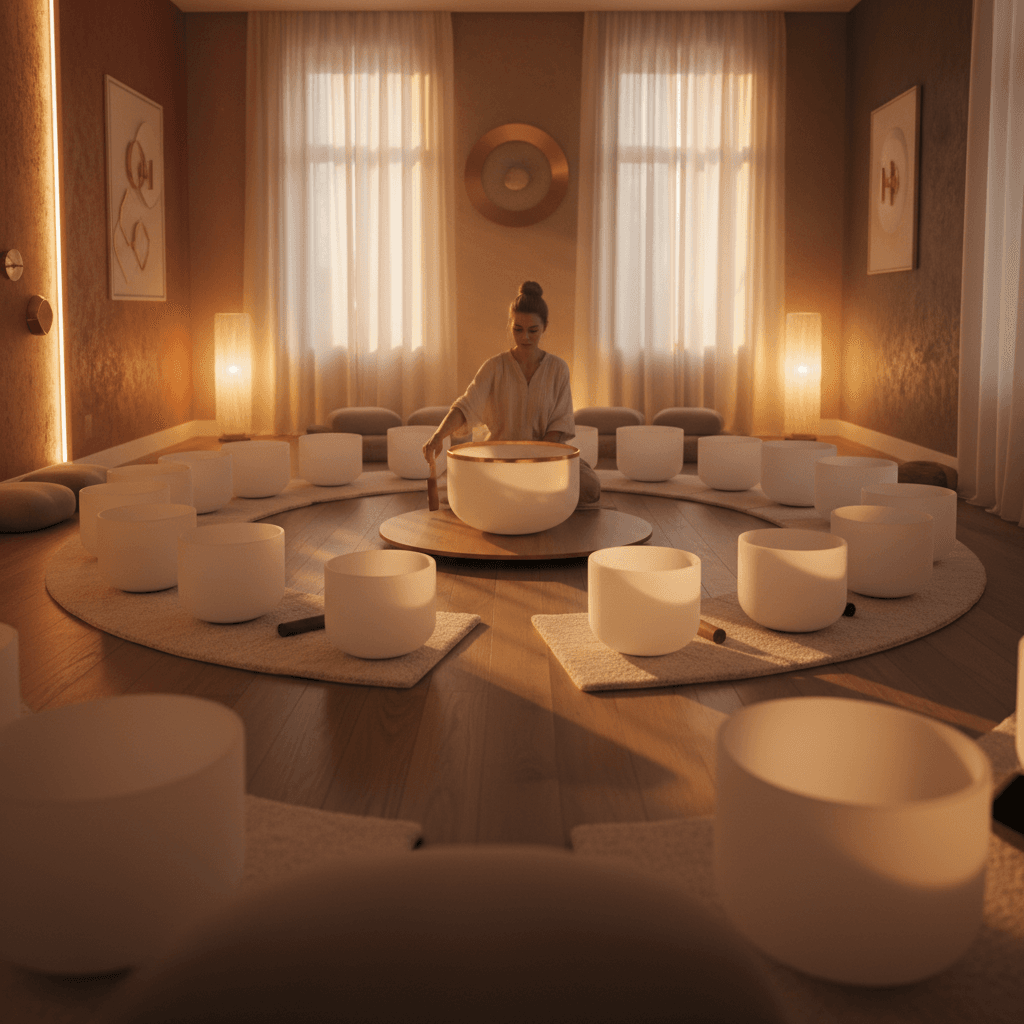
- Crystal Singing Bowls: Crafted from pure quartz, these bowls create pure, clear tones with expansive vibrations. Their sound is often described as ethereal, helping to clear mental fog and promote a sense of spiritual calm, offering a powerful antidote to sensory overload.
- Gongs: The powerful, enveloping sound of gongs creates a deep immersion, facilitating a profound release of tension and emotional blockages. The sustained vibrations resonate throughout the body, stimulating the parasympathetic nervous system and promoting cellular relaxation.
- Chimes and Other Percussion: Delicate chimes and other subtle percussion instruments are used to add layers to the sonic landscape, creating intricate textures that encourage mindful listening and provide a gentle journey back from deep relaxation.
Larissa Steinbach also integrates breathwork and guided meditation into her sound journeys. This combination amplifies the therapeutic effects, teaching clients how to consciously regulate their nervous system and cultivate inner quiet. The environment at Soul Art is meticulously designed to be a true sanctuary, acoustically treated to block external noise, allowing for an undisturbed immersion in therapeutic sound. This intentional space is critical for healing, offering a respite where the body and mind can truly decompress from the constant bombardment of urban sound pollution.
Through these carefully curated experiences, Soul Art helps individuals not only find immediate relief from stress but also build long-term resilience against the detrimental impacts of environmental noise, fostering a deeper connection to inner peace and well-being.
Your Next Steps
Recognizing the pervasive impact of environmental sound pollution is the first step towards reclaiming your sonic health. While we cannot always control the external world, we can empower ourselves with strategies to mitigate its effects and nurture our inner well-being. Here are practical steps you can implement today to reduce your noise exposure and enhance your resilience.
- Create Quiet Zones at Home: Identify areas in your living space where you can intentionally reduce noise. This might involve using sound-absorbing materials like rugs and curtains, sealing gaps around windows and doors, or simply designating a "no-noise" hour for relaxation. Even small changes can make a significant difference in your daily auditory experience.
- Practice Intentional Listening: Counter the effects of unwanted noise by actively seeking out soothing sounds. Listen to nature sounds, calming music, or engage in sound meditations. This helps to re-train your brain to focus on harmonious frequencies, promoting relaxation rather than stress.
- Limit Digital Noise: Be mindful of the constant stream of notifications, alerts, and digital media. Take regular breaks from screens and devices, which often contribute to our overall noise exposure. Establishing digital detox periods can significantly reduce cognitive load.
- Explore Nature's Symphony: Spend time in natural environments like parks or beaches, where the sounds are typically less intrusive and more restorative. The gentle rustle of leaves, the murmur of water, or the chirping of birds can help recalibrate your auditory system and nervous system.
- Incorporate Sound Wellness into Your Routine: Consider sound wellness practices as a complementary approach to stress management. Engaging with therapeutic sound can help your body and mind release accumulated tension from noise pollution, promoting deeper relaxation and mental clarity. Many people report significant benefits from regular sound baths.
Taking proactive steps to manage your sonic environment and engaging in restorative sound practices can profoundly impact your overall well-being. It's an investment in your peace of mind and long-term health.
In Summary
Environmental sound pollution is an invisible antagonist in our modern lives, insidiously eroding our cognitive function, burdening our physical health, and challenging our mental and emotional well-being. Scientifically, its links to impaired reading comprehension, increased risk of cognitive impairment, cardiovascular diseases, sleep disturbances, and mental health issues like anxiety and depression are increasingly clear. Yet, awareness is the first and most crucial step towards mitigation.
At Soul Art, Larissa Steinbach champions a holistic approach to counteracting these pervasive effects. Through carefully curated sound wellness experiences, using instruments like Himalayan and crystal singing bowls, and gongs, we offer a sanctuary where the body and mind can deeply decompress. This complementary practice helps to reset the nervous system, foster inner peace, and build resilience against the cacophony of the urban landscape. By understanding the impact of noise and embracing intentional sound, you can actively reclaim your tranquility and foster a life of greater harmony.
Bookings Coming Soon
Soul Art is still in preparation. Session details and booking will be published here after launch.
Coming Soon
Wellness Disclaimer: This article is for educational and informational purposes only. It does not constitute medical advice, diagnosis, or treatment. Soul Art Dubai provides non-medical wellness experiences focused on relaxation, stress management, and general wellbeing. Sound wellness is a complementary practice and should not replace professional medical care.
Related Articles
Unlock Deeper Healing: Recording Your Own Sound Journeys with Soul Art
Water Consciousness: Sound's Subtle Influence on H2O for Wellness

The Silent Symphony: Plant Bioacoustics & Human Wellness