Corporate Sound Bath ROI: What Your HR Team Can (and Can't) Measure
Key Insights
Explore the measurable and intangible returns of corporate sound baths for employee well-being, stress reduction, and productivity in Dubai.
In a corporate landscape increasingly defined by relentless digital demands and the pursuit of peak performance, a surprising question is emerging in boardrooms: Can the tranquil vibrations of a sound bath truly impact the bottom line? Many HR leaders are moving beyond traditional wellness perks, seeking concrete data to justify investments in employee well-being. At Soul Art, Dubai’s premier sound wellness studio founded by Larissa Steinbach, we understand that the return on investment (ROI) for such initiatives is not just a 'nice-to-have' but a strategic imperative.
This article delves into the burgeoning world of corporate sound baths, exploring what can be quantitatively measured to demonstrate their value and acknowledging the profound, yet often intangible, benefits that defy easy metrics. We'll unpack the science, dissect the practical applications, and illuminate how a sophisticated approach to sound wellness can transform your team's cognitive endurance and overall organizational health. Prepare to discover how targeted neurological resets are becoming as essential as ergonomic chairs in the modern, high-performance workplace.
The Science Explained: Unlocking Neurological Resilience
The effectiveness of corporate sound baths is not merely anecdotal; it is increasingly supported by a growing body of scientific evidence. At its core, sound wellness leverages the profound connection between auditory input and the human nervous system. When we are exposed to specific frequencies and vibrations, our internal physiological rhythms respond, leading to measurable changes in our mental and physical state.
Rhythmic Entrainment and Nervous System Regulation
One of the primary mechanisms at play is rhythmic entrainment, a biological phenomenon where internal rhythms, such as heart rate and brainwave patterns, synchronize with external rhythmic stimuli. The consistent, resonant pulses produced by gongs, crystal bowls, and chimes in a sound bath guide the brain from faster, often stress-induced beta wave states to slower, more relaxed alpha and theta waves. This process acts as a biological hack, bypassing conscious thought to deliver immediate relief and neurological reset points. By regulating the nervous system, individuals can move out of "fight or flight" mode, unlocking the prefrontal cortex—the area of the brain responsible for creative problem-solving and strategic thinking.
Hormonal and Physiological Markers
Research consistently points to the ability of sound therapy to influence key physiological stress markers. Preliminary studies indicate reductions in stress hormones like cortisol, alongside decreases in blood pressure and heart rate following sound or music interventions. A 2016 study published in the Journal of Evidence-Based Integrative Medicine observed that sound meditation significantly reduced tension and improved mood in 62 participants after a single session. This suggests a direct physiological response to the sonic environment, transitioning the body into a state conducive to healing and restoration.
The Schumann Resonance and Cognitive Enhancement
An intriguing area of ongoing research involves the Schumann resonance, a natural Earth frequency around 7.8 Hz. Scientists are exploring if exposure to this frequency, which coincides with the brain’s optimal flow-state rhythm, can help office workers achieve peak focus more easily. Furthermore, sound therapy can activate the parasympathetic nervous system, counteracting the effects of chronic stress and promoting deep relaxation. This shift is crucial for cognitive endurance; high-performance teams don't need more caffeine, they need these deliberate opportunities for neurological recalibration.
Impact on Mood, Sleep, and Cognition
The benefits extend beyond immediate relaxation. Sound and music can influence mood via the limbic pathways, which are brain regions tied to emotion. Participants in sound meditation studies often report reductions in tension, anxiety, and depressed mood, alongside increases in positive mood. Sound waves are also known to help relax muscles, reduce anxiety, and improve sleep quality, all of which are critical for overall well-being and sustained productivity. A review of over 20 studies also suggests that specific auditory stimuli, such as binaural beats, may help improve memory and attention when used before or during tasks, showcasing sound's potential for direct cognitive enhancement.
How It Works in Practice: The Immersion Experience
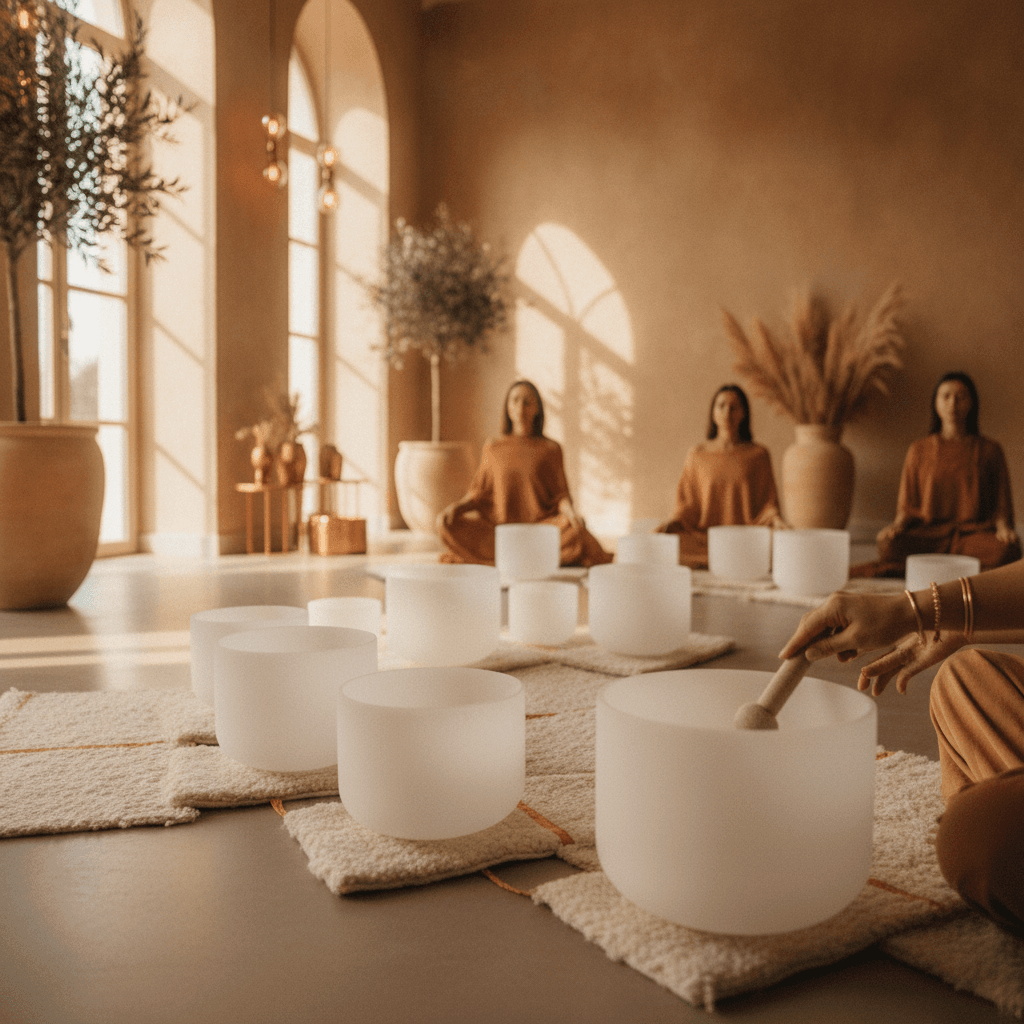
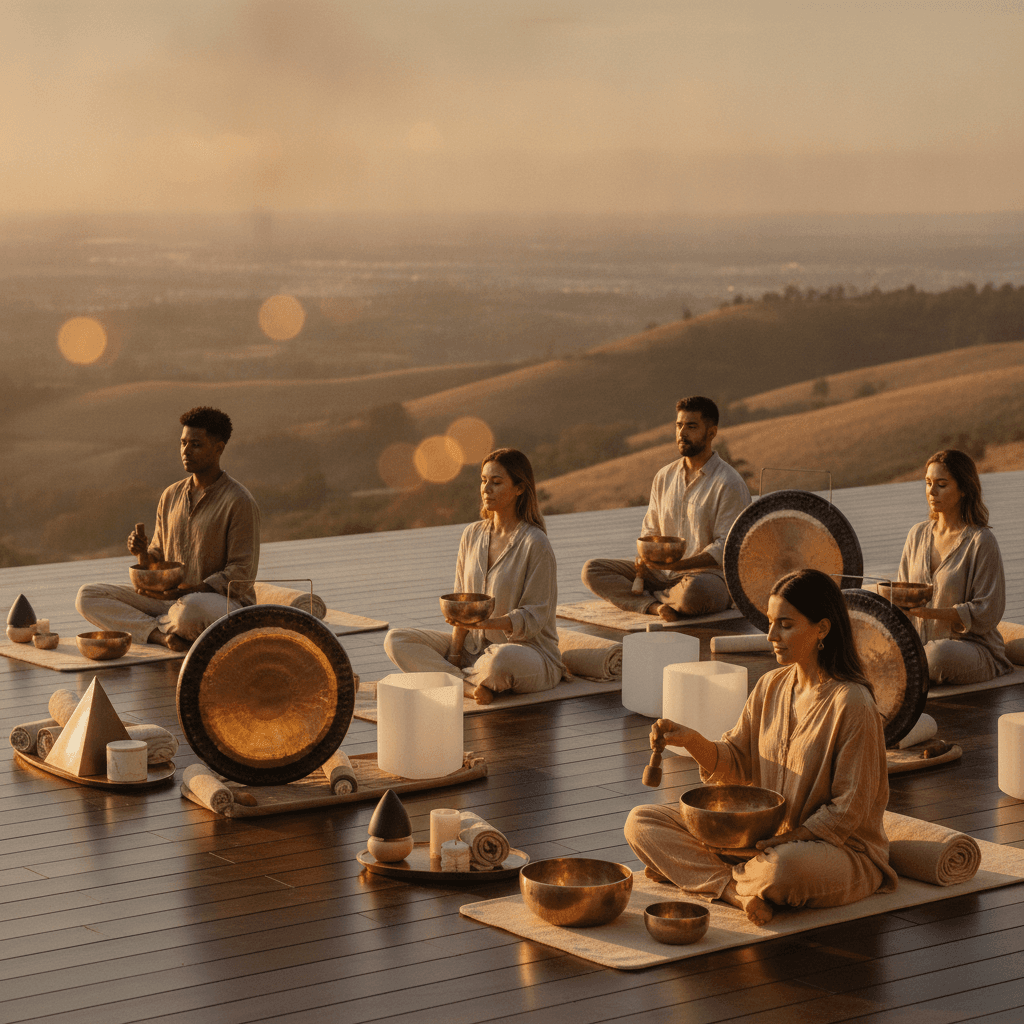
Stepping into a corporate sound bath facilitated by Soul Art is an intentional departure from the everyday hustle. The environment is carefully curated to foster deep relaxation, often involving comfortable mats, gentle lighting, and a serene atmosphere. Participants lie down, close their eyes, and allow themselves to be fully immersed in a landscape of therapeutic sound.
The session typically begins with an introduction from the facilitator, setting an intention for relaxation and openness. Then, the sound journey commences. Instruments like large gongs, precision-tuned crystal singing bowls, Tibetan singing bowls, chimes, and various percussive elements are played in a sequence designed to create a resonant field. These sounds are not merely background noise; they are active agents of change, producing complex overtones and vibrations that permeate the space.
As the sound washes over and through the body, participants often report a profound sense of calm. The mind, often racing with deadlines and emails, begins to quiet. The brain's natural tendency to entrain with the external rhythms gently guides it into deeper, more meditative states. Many people report feeling vibrations physically, particularly from gongs and larger bowls, which contributes to muscle relaxation and a release of tension. This is where the "bath" metaphor truly comes alive – one is bathed not in water, but in healing sound frequencies.
"The ROI of Calm is a measurable increase in cognitive endurance. By investing in these sessions, companies see a direct correlation between deep relaxation and a reduction in costly employee turnover rates."
Sensory details are crucial to the experience: the shimmering decay of a gong note, the pure sustained tone of a crystal bowl, the delicate sparkle of chimes. These carefully chosen sounds work together to create an immersive experience that bypasses the conscious mind. It’s a biological hack that delivers immediate relief, allowing individuals to enter a deep state of calm, letting go of thoughts, and resetting their internal rhythms. This deep relaxation supports the body's natural restorative processes, helping to reduce stress, improve sleep, and even enhance creativity and intuition.
The Corporate Sound Bath ROI: What Can and Cannot Be Measured
For HR leaders, the question of ROI is paramount. While the profound experiential benefits of a sound bath are widely reported, quantifying them in hard financial terms requires a strategic approach. It's vital to understand what data points can be tracked and which valuable outcomes are more intangible, contributing to a holistic picture of employee well-being.
What Can Be Measured (Quantitative ROI)
The financial and operational returns on investment in corporate wellness programs are increasingly demonstrable:
- Reduction in Absenteeism: A 2025 pilot study conducted at a Tier 1 tech firm showed a 14% reduction in stress-related absenteeism over a six-month period following regular corporate wellness sound baths. This directly translates into significant cost savings and improved productivity.
- Decreased Employee Turnover: Early 2026 data revealed an 11% drop in costly employee turnover rates in departments actively utilizing sound therapy. Reducing turnover saves companies substantial recruitment and training expenses, while maintaining institutional knowledge.
- Healthcare Cost Savings: A widely cited World Health Organization analysis found that every $1 invested in scaling up treatment for common mental health conditions like depression and anxiety returns roughly $4 in improved health and productivity. Proactive well-being programs, like sound baths, fit squarely into this category, leading to meaningful savings in healthcare costs for large employers.
- Physiological Stress Markers: Pre- and post-session measurements can track tangible changes such as:
- Reduced Cortisol Levels: A direct indicator of decreased physiological stress.
- Lower Heart Rate and Blood Pressure: Signs of a relaxed nervous system.
- Improved Heart Rate Variability (HRV): A key metric for nervous system resilience and overall health.
- Enhanced Cognitive Metrics: Companies and universities are conducting studies to measure:
- Focus and Attention Scores: Pre- and post-sound sessions to assess improvements.
- Creativity Scores: Quantifying the ability to generate novel ideas after neurological resets.
- Memory Performance: Especially relevant when incorporating techniques like binaural beats.
- Self-Reported Well-being Data: Standardized self-report stress measures provide quantifiable data on employee perceptions of stress, anxiety, tension, and mood. These surveys, when consistently administered, offer valuable insights into the subjective impact of sound baths.
- ESG (Environmental, Social, and Governance) Metrics: Mental health is no longer a soft perk but a core governance metric. In 2026, 42% of Fortune 500 companies integrated sound-based recovery into their social responsibility frameworks, recognizing its role in combating the cognitive drain of the digital age. This demonstrates a commitment to employee well-being that can enhance brand reputation and attract talent.
What Cannot Be Easily Measured (Intangible ROI)
While financial metrics are crucial, some of the deepest impacts of corporate sound baths are qualitative and contribute to a richer, more engaged workplace culture, even if they are harder to quantify directly.
- Enhanced Team Cohesion and Psychological Safety: Sharing a collective, deeply relaxing experience can foster a sense of unity and shared vulnerability among colleagues. This builds trust and psychological safety, which are foundational for high-performing teams, but difficult to put a number on.
- Improved Workplace Culture and Morale: Employees who feel valued and supported by their organization tend to have higher morale. Providing opportunities for stress reduction and self-care, particularly a "quiet luxury" offering like a sound bath, signals a commitment to employee well-being that resonates deeply.
- Creative Breakthroughs and Innovation: While creativity scores can be tracked, the spark of an innovative idea, the sudden insight gained during a relaxed state, or the enhanced problem-solving capacity that arises from a regulated nervous system is challenging to attribute solely to a sound bath.
- Individual Resilience and Emotional Regulation: Sound baths may support an employee's ability to cope with daily stressors, bounce back from setbacks, and manage emotions more effectively. These are critical skills for long-term career success and personal well-being, but their direct causal link to a sound bath and subsequent financial value is complex to isolate.
- Brand Perception and Talent Attraction: A company known for genuinely investing in its employees' holistic well-being becomes a more attractive employer. While this contributes to reduced recruitment costs and a stronger talent pipeline, the exact monetary value of this enhanced brand perception is often an educated estimation.
- Duration of Benefits: While many participants report immediate reductions in stress, tension, and improved mood, the long-term duration and cumulative effects of these altered feelings require more extensive, longitudinal research. UCLA Health notes that while significant immediate effects are reported, data on how long these altered feelings last is still emerging.
Limitations and Scientific Caveats
It's important to approach the evidence with a nuanced perspective. While promising, much of the research on sound bath therapy is still emerging.
- Study Design and Generalizability: Many trials are small, observational, or pilot studies. While results are encouraging, larger, randomized controlled trials are needed to define effect sizes, optimal session length, and specific protocols for different populations. For example, a study on teachers may not directly generalize to other professional groups due to differing workloads and stressors.
- Placebo and Expectation Effects: The relaxing environment, the ritualistic nature, and the positive expectations associated with a wellness practice can contribute to reported benefits. It's challenging to isolate the exact impact of the sound itself from these contextual factors. However, even if part of the benefit stems from these elements, the positive outcomes (less stress, better sleep, improved mood) remain meaningful for participants.
- Inconsistency in Measurement: As highlighted by a 2025 Wellhub report, 95% of organizations that measure wellness ROI report positive returns, yet there's significant inconsistency in how this return is defined and tracked. This underscores the need for standardized measurement protocols in corporate settings.
Ultimately, corporate sound baths offer a powerful, complementary approach to well-being. While some benefits lend themselves to robust quantitative measurement, others contribute to the invaluable, qualitative fabric of a thriving, resilient workforce.
The Soul Art Approach: Larissa Steinbach's Vision
At Soul Art, Larissa Steinbach has cultivated a unique methodology that synthesizes scientific understanding with a deeply intuitive and empathetic approach to sound wellness. Recognising Dubai’s dynamic corporate environment, Larissa designs sound bath experiences that are not just relaxing, but strategically impactful, aiming for profound neurological recalibration and cognitive enhancement.
The Soul Art method goes beyond simply playing instruments; it involves a meticulous selection of specific frequencies and resonant intervals tailored to induce deep relaxation and nervous system regulation. Larissa and her team utilise a diverse array of instruments, including museum-quality crystal quartz singing bowls, each tuned to a specific chakra or energetic resonance, powerful gongs that create immersive soundscapes, and gentle chimes that punctuate the experience with ethereal accents. These are expertly played to create rhythmic entrainment, guiding participants into states of deep meditation and restoration.
What makes the Soul Art method unique is its holistic integration of scientific principles with an understanding of individual and collective energy. Larissa Steinbach frequently incorporates breathwork and mindful awareness techniques into corporate sound bath sessions, amplifying the benefits of the sonic experience. This integrated approach helps employees not only relax but also cultivate greater self-awareness and emotional regulation skills that extend beyond the session.
Larissa's expertise also extends to curating bespoke corporate programs. She understands that each organization has unique needs and challenges. Soul Art collaborates closely with HR teams to design sound wellness interventions that align with specific corporate objectives, whether it's reducing stress-related absenteeism, boosting creative output, or fostering team cohesion. The goal is to provide a sophisticated wellness solution that is both luxurious in its experience and grounded in its measurable impact on employee well-being and organizational performance.
Your Next Steps: Integrating Sound Wellness
Integrating sound wellness into your corporate strategy can be a transformative step towards cultivating a more resilient, focused, and engaged workforce. The initial investment in employee well-being yields significant returns, both measurable and intangible, fostering a culture where mental health is prioritized.
Here are practical steps your organization can take today:
- Start with a Pilot Program: Begin with a series of sound bath sessions for a specific department or team. This allows you to gather initial feedback and observe immediate impacts before a broader rollout.
- Define Clear Metrics: Work with your HR team to establish key performance indicators (KPIs) to track. This could include pre- and post-session stress surveys, absenteeism rates, or feedback on focus and creativity.
- Educate Your Team: Provide clear information about the science behind sound baths. Demystifying the practice helps employees understand its benefits and encourages participation, moving beyond any "new-age" misconceptions.
- Regularity is Key: Just like physical exercise, the benefits of sound wellness accumulate with consistency. Encourage regular participation, perhaps monthly or bi-weekly, to allow employees to build a sustained practice of neurological reset.
- Partner with Experts: Collaborate with experienced practitioners like Soul Art, led by Larissa Steinbach, to ensure high-quality, scientifically informed, and professionally delivered sound bath experiences that align with your corporate values.
By taking these steps, your organization can harness the power of sound to create a workplace where well-being is not just a perk, but a foundational element of sustained success.
In Summary
The landscape of corporate wellness is rapidly evolving, with sound baths emerging as a powerful, science-backed tool for enhancing employee well-being and driving organizational performance. While the tangible ROI, such as reduced absenteeism, lower turnover, and improved cognitive metrics, offers compelling justification for HR leaders, the equally vital, albeit less quantifiable, benefits of enhanced team cohesion and elevated morale create a truly holistic return. At Soul Art, Larissa Steinbach champions a sophisticated approach to sound wellness, demonstrating how deliberate neurological resets can cultivate a more resilient and innovative workforce. Embrace this complementary practice to invest in the profound well-being of your most valuable asset: your people.
Bookings Coming Soon
Soul Art is still in preparation. Session details and booking will be published here after launch.
Coming Soon
Wellness Disclaimer: This article is for educational and informational purposes only. It does not constitute medical advice, diagnosis, or treatment. Soul Art Dubai provides non-medical wellness experiences focused on relaxation, stress management, and general wellbeing. Sound wellness is a complementary practice and should not replace professional medical care.
Related Articles
Unlock Corporate Value: The CFO's Guide to Sound Wellness ROI
Elevate Team Wellness: Sound Baths, Breathwork & Meditation
Navigating Biometric Data Privacy in Corporate Wellness