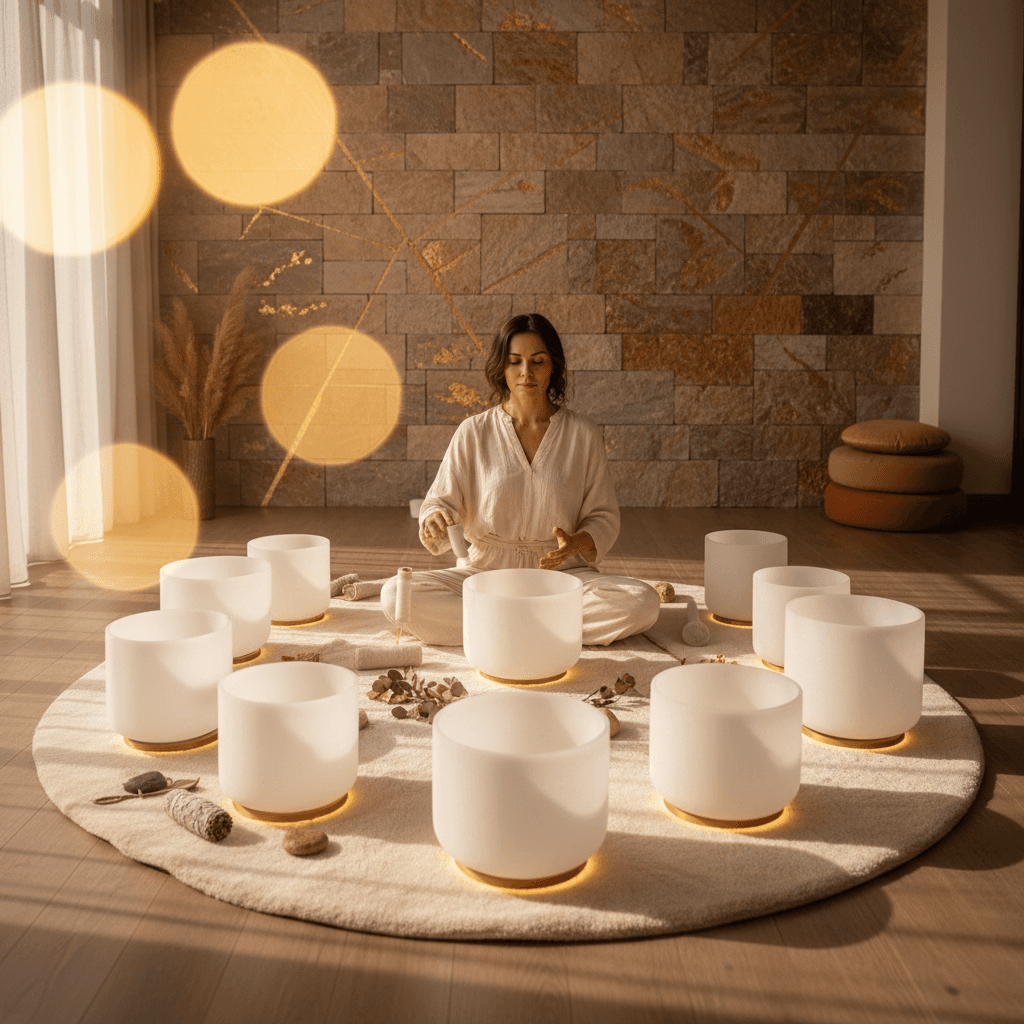
Sound Healing Safety: Understanding Contraindications for Your Wellbeing
Key Insights
Explore when sound healing may not be suitable. Soul Art's guide to contraindications ensures your safety and optimal wellness journey.
Unveiling the Nuances: When Sound Healing May Not Be Right
Could something as seemingly gentle as a sound bath ever be unsuitable for someone seeking relaxation and inner peace? In the world of holistic wellness, where ancient practices meet modern understanding, the answer is a thoughtful "sometimes." While sound healing offers profound benefits for many, particularly in stress reduction and emotional release, understanding its contraindications is not just responsible practice—it is paramount for your safety and well-being.
At Soul Art, Dubai's premier sound wellness studio founded by Larissa Steinbach, our commitment extends beyond delivering transformative experiences; it encompasses educating our community about making informed choices. This comprehensive guide delves into the specific circumstances when sound healing may require caution or, in some cases, be contraindicated entirely. We aim to empower you with the knowledge to navigate your wellness journey with confidence and integrity.
The Science Explained: Vibrations, Resonance, and Body Sensitivity
Sound healing, often referred to as a "sound bath," is an integrative wellness practice that harnesses the power of vibrational frequencies to encourage relaxation, rebalance the nervous system, and facilitate emotional processing. Instruments such as gongs, singing bowls, and chimes create resonant vibrations that ripple through the body, which is approximately 70% water, influencing every cell. This deep cellular interaction is what gives sound healing its powerful potential, mimicking the benefits of deep meditation by shifting brainwave states towards alpha and theta frequencies.
However, the very potency of these vibrations and the subtle electromagnetic fields generated by certain instruments necessitate a careful consideration of individual physiological and medical conditions. Contraindications in sound healing refer to specific situations where a particular technique, instrument, or the overall experience might be unsafe or inappropriate for a person. Recognizing these boundaries is an essential component of ethical and effective practice.
Understanding the Mechanisms of Caution
The human body is an intricate system, and while sound vibrations are generally harmonizing, in certain states, they can introduce risks. The principles behind these contraindications are rooted in how sound waves interact with biological tissues, medical devices, and sensitive physiological processes. It's about ensuring that the intent to heal and relax does not inadvertently create discomfort or exacerbate existing conditions.
Consider the physical nature of sound: it is energy that travels in waves. These waves can physically move matter, and within the body, this means influencing fluids, tissues, and even bone. For individuals with certain vulnerabilities, this physical interaction needs careful management. Moreover, some instruments, particularly gongs, generate subtle electromagnetic fields, which can interact with sensitive electronic medical devices.
Key Contraindications and Their Scientific Rationale
It's crucial for anyone considering sound healing to be aware of the following potential contraindications. This list, while comprehensive, is not exhaustive, and individual circumstances should always be discussed with both a medical professional and your sound wellness practitioner.
1. Deep Vein Thrombosis (DVT) and Known Thrombi
Individuals with deep vein thrombosis or any known blood clots are strongly advised against participating in sound healing sessions, especially those involving direct application of instruments or strong, pervasive vibrations. The powerful vibrations and movements associated with some sound healing techniques, particularly if applied directly to an affected area, could potentially dislodge these blood clots. If a clot breaks free, it can travel to the lungs (pulmonary embolism), leading to a life-threatening medical emergency. The mechanical agitation of vibrations is the primary concern here.
2. Pacemakers, Defibrillators, and Other Electronic Implants
Electronic medical devices like pacemakers, defibrillators, cochlear implants, deep brain stimulation (DBS) devices, and even artificial heart valves are highly sensitive to electromagnetic fields. Certain sound bath instruments, particularly large gongs and some singing bowls, generate these fields. While the research is ongoing, there is concern that these fields could potentially interfere with the proper functioning of such devices, leading to malfunction or disruption of their critical rhythm regulation. It is imperative to consult with your healthcare provider before participating and to inform your sound wellness practitioner, such as Larissa Steinbach at Soul Art, so necessary accommodations or exclusions can be made.
3. Metallic Implants (Stents, Shunts, Plates, Pins, Screws, Artificial Joints)
Similar to electronic devices, individuals with metallic implants should exercise caution. While metal plates or pins generally don't carry the same electromagnetic risk as pacemakers, intense vibrations could theoretically cause discomfort, resonance, or even slight movement of the implant, depending on its location and how recently it was placed. For recent surgeries, the area around the implant will be particularly sensitive. It's wise to speak with a medical professional beforehand and inform your sound therapist, who can ensure instruments are not placed directly on or near the affected area.
4. Pregnancy
While many expectant mothers find gentle sound baths incredibly soothing, special precautions are advised, especially during the first and third trimesters. The limited scientific research on the effects of intense sound vibrations specifically on pregnant women and their developing fetuses leads to a cautious approach. The developing fetus is highly sensitive, and intense or very low frequencies might potentially be unsettling or stimulate uterine contractions. A medical consultation is essential, and an experienced practitioner will always ensure a gentle, distanced approach if approved, or recommend deferring until after childbirth.
5. Open Wounds, Acute Inflammations, Tumours, and Post-Surgery Sites
Direct application of sound instruments or intense vibrations near open wounds, areas of acute inflammation, tumours, or unhealed post-surgical sites (before sutures are removed and the scar is fully closed) is contraindicated. The vibrations could aggravate the condition, delay healing, or cause discomfort. For any inflammatory processes generally associated with fever, it's best to allow the body to recover fully before engaging in vibrational therapies. Conditions like inflamed joints, weeping eczema, or diseased veins also warrant avoiding direct contact with the affected area.
6. Epilepsy and Other Neurological Conditions
Individuals with epilepsy should consult their doctor before engaging in sound healing. While sound can be relaxing, certain frequencies, intense rhythmic patterns, or sudden loud sounds could theoretically act as triggers for some individuals, depending on their specific condition. Similarly, those with other serious neurological disorders should seek medical advice.
7. Severe Mental Health Conditions
Sound healing can be profoundly beneficial for mental health, helping to release emotional blockages and promote relaxation. However, for individuals undergoing treatment for severe mental health disorders (e.g., bipolar disorder, schizophrenia), the experience may trigger intense emotional releases or potentially exacerbate existing conditions in a vulnerable state. A skilled practitioner will always prioritize a safe and supportive environment, requiring upfront disclosure and often a doctor's clearance to ensure appropriate care.
8. Heart Conditions and Vascular Issues
People with certain heart conditions, such as cardiac arrhythmias, artificial heart valves, carotid stenosis, or other significant vascular issues, should consult their doctor before participating in sound healing. The physiological responses to deep relaxation, coupled with the vibrational input, could theoretically impact cardiovascular function. While generally safe, personalized medical guidance is always the best approach.
"True wellness leadership isn't just about sharing light; it's also about illuminating the shadows, ensuring every step on the path to healing is taken with informed awareness and unwavering care."
How It Works in Practice: Ethical Screening and Personalized Care
At Soul Art, integrating these contraindications into practice is a cornerstone of our ethical framework. It ensures that every client receives not only a deeply transformative experience but also one that is fundamentally safe and tailored to their unique needs. The initial consultation and intake process are vital steps in this journey, allowing for a comprehensive understanding of each individual's health profile.
When you prepare for a sound healing session, whether it's your first time or you're a returning client, the process typically begins with a detailed health questionnaire. This is your opportunity to openly communicate any existing medical conditions, past surgeries, medications, or concerns you might have. Transparency is key here, as it empowers your practitioner to make informed decisions and necessary adjustments. For instance, knowing about a metallic implant allows the practitioner to avoid placing instruments directly on or near that area, maintaining a respectful distance to ensure your comfort and safety.
Upon reviewing your health information, your sound wellness practitioner will engage in a conversation to clarify any points and address your questions. This dialogue is crucial. For example, if you have a history of deep vein thrombosis, the practitioner might explain why intense vibrations near your legs would be avoided, or recommend a different, gentler approach altogether. If you are pregnant, the session may be modified to use lighter instruments, softer tones, and maintain a greater distance from the body, always with prior medical consent.
Clients with heightened sound sensitivity, or those who identify as highly sensitive individuals, might experience sound differently. For them, a practitioner might suggest a quieter space, specific instruments that produce gentler frequencies, or a shorter session duration to ensure the experience is grounding rather than overwhelming. The goal is always to meet you where you are, fostering an environment where you feel seen, heard, and completely safe.
The practitioner's expertise also extends to reading subtle cues during a session. They are trained to observe your body language, breathing patterns, and overall comfort level. If at any point you feel uneasy or experience discomfort, it's encouraged to communicate this immediately. This collaborative approach between client and practitioner ensures that the session remains adaptive and responsive to your needs, prioritizing your well-being above all else. This meticulous attention to individual client profiles is what elevates a standard sound bath to a truly personalized and responsible wellness journey.
The Soul Art Approach: Larissa Steinbach’s Commitment to Integrity
At Soul Art, Larissa Steinbach has meticulously crafted an environment where deep relaxation, spiritual exploration, and uncompromising safety converge. Larissa's philosophy is rooted in the belief that while sound is a potent force for good, its power demands respect, integrity, and profound knowledge. This dedication is reflected in every facet of the Soul Art experience, from the carefully selected instruments to the rigorous training of our practitioners.
Larissa Steinbach personally oversees the development of our intake protocols, which are designed to be thorough yet empathetic. Before any session commences, each client completes a detailed health assessment, followed by a personalized discussion with their sound wellness guide. This ensures that every potential contraindication is identified and understood. It's not merely a checklist; it's a conversation built on trust and a shared commitment to your well-being.
What makes the Soul Art method truly unique is its emphasis on individualized care within a group setting, or bespoke private sessions. Our practitioners, guided by Larissa’s extensive expertise, are skilled in adapting sessions to suit diverse needs. For instance, if a client discloses a metallic implant, specific instruments like tuning forks or certain singing bowls will not be placed directly on or near the affected area. Instead, the vibrations will be delivered from a safe distance, focusing on the energetic field surrounding the body. Similarly, for pregnant clients (with medical clearance), instruments known for their gentler frequencies, such as crystal bowls, might be prioritized, and gongs would be played with a softer touch and from a greater distance.
We utilize a diverse array of high-quality, ethically sourced instruments, including Nepalese singing bowls, crystal alchemy bowls, symphonic gongs, chimes, and various percussive elements. Each instrument is chosen for its specific vibrational qualities and its capacity to induce particular states of relaxation and balance. Our practitioners are adept at discerning which instruments and techniques are most appropriate for each individual, always mindful of any potential contraindications.
Larissa Steinbach firmly believes that true healing begins with a foundation of trust and safety. This principle is woven into the very fabric of Soul Art, ensuring that every journey into the world of sound is not only transformative but also profoundly respectful of your unique physical and emotional landscape. Our commitment is to empower you to explore the depths of your inner world with confidence, knowing you are held in expert and compassionate hands.
Your Next Steps: Navigating Your Wellness Journey Safely
Understanding contraindications is not meant to deter you from exploring the immense benefits of sound healing, but rather to empower you to do so safely and responsibly. Your journey into vibrational wellness should be one of peace and positive transformation, free from unnecessary risks. Here are some actionable steps you can take to ensure your sound healing experience is optimally supportive:
- Consult Your Healthcare Provider: If you have any medical conditions, chronic illnesses, electronic or metallic implants, are pregnant, or are taking medications, always speak with your doctor before engaging in sound healing. Obtain their advice and share it with your wellness practitioner.
- Be Transparent with Your Practitioner: During your initial consultation or intake at Soul Art, openly and thoroughly disclose all relevant health information. This includes past surgeries, current conditions, and any concerns. Your practitioner relies on this information to customize your experience and ensure your safety.
- Listen to Your Body: During a session, pay close attention to how you feel. If any sensation is uncomfortable, too intense, or causes concern, gently communicate this to your practitioner immediately. It’s always okay to ask for an adjustment or to pause.
- Choose Qualified and Ethical Practitioners: Seek out studios and practitioners, like Larissa Steinbach and her team at Soul Art, who prioritize client safety, adhere to ethical guidelines, and have comprehensive training in contraindications. A responsible practitioner will always conduct thorough screenings.
- Start Gently: If you are new to sound healing or have specific sensitivities, consider starting with a private, personalized session rather than a large group bath. This allows for a more controlled environment where adjustments can be made more easily to your comfort level.
In Summary: Embracing Mindful Wellness
Sound healing is a gentle yet incredibly powerful tool, capable of ushering in deep relaxation, stress reduction, and profound emotional release. However, like any potent wellness modality, it demands awareness and respect for its contraindications. By understanding when and why certain conditions warrant caution, you safeguard your well-being and maximize the positive impact of your experience.
At Soul Art, founded by Larissa Steinbach, our dedication to client safety and informed practice is unwavering. We believe that true healing flourishes in an environment of trust, knowledge, and personalized care. We invite you to explore the transformative world of sound with us, secure in the knowledge that your health and comfort are our highest priority. Embark on a journey of vibrational harmony, thoughtfully and safely.
Bookings Coming Soon
Soul Art is still in preparation. Session details and booking will be published here after launch.
Coming Soon
Wellness Disclaimer: This article is for educational and informational purposes only. It does not constitute medical advice, diagnosis, or treatment. Soul Art Dubai provides non-medical wellness experiences focused on relaxation, stress management, and general wellbeing. Sound wellness is a complementary practice and should not replace professional medical care.
Related Articles
Unlock Deeper Healing: Recording Your Own Sound Journeys with Soul Art
Water Consciousness: Sound's Subtle Influence on H2O for Wellness

The Silent Symphony: Plant Bioacoustics & Human Wellness