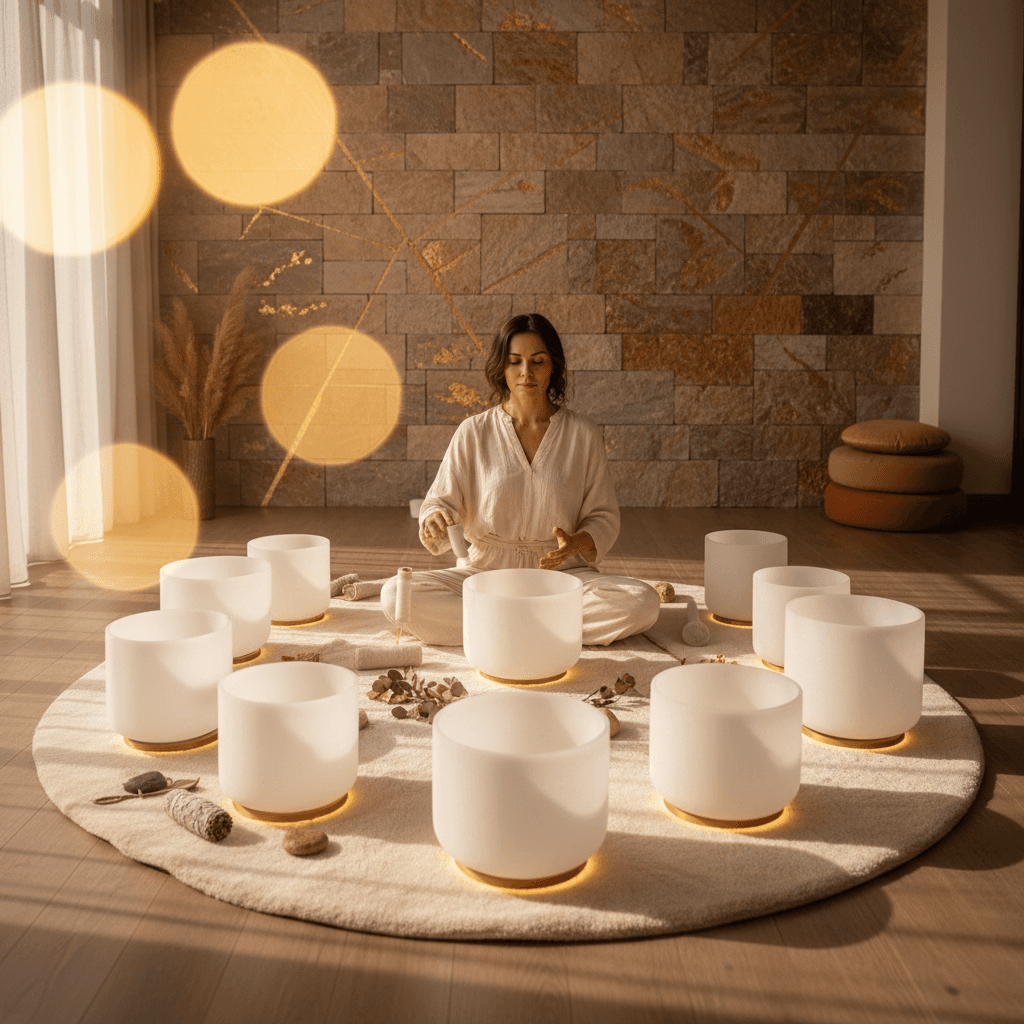
The Sonic Sanctuaries: Ancient Temple Acoustics & Modern Well-being

Key Insights
Explore ancient temple acoustics, sacred sound architecture, and how resonant frequencies impact modern well-being at Soul Art Dubai with Larissa Steinbach.
A Symphony of Stones: Unearthing Ancient Sound Architecture
Imagine entering an ancient temple, not merely as a structure of stone and myth, but as a living instrument. What if the architects of antiquity deliberately designed these sacred spaces to interact with sound, crafting immersive acoustic experiences that profoundly influenced human perception and spiritual states? Recent advancements in archaeoacoustics suggest this was not only possible but a widespread practice across diverse cultures.
From the echoing chambers of Malta to the bird-calling pyramids of Mesoamerica, our ancestors understood the profound power of sound. They engineered environments where specific frequencies could resonate, amplify, or even distort, creating an atmosphere ripe for ritual, contemplation, and deep connection. This fascinating intersection of architecture, sound, and consciousness holds invaluable lessons for our modern pursuit of well-being.
At Soul Art, founded by Larissa Steinbach, we delve into these ancient principles, translating the wisdom of sacred sound architecture into contemporary practices. Understanding how sound shapes our inner landscape can unlock new pathways to relaxation, stress reduction, and holistic wellness. Join us on a journey to explore these sonic sanctuaries and their enduring legacy.
The Deep Resonance: Unveiling the Science of Sacred Sound
The intentional manipulation of sound within architectural spaces is far from a modern invention. Across millennia and continents, ancient civilizations meticulously crafted structures to produce specific acoustic phenomena. This sophisticated understanding of sound physics, now being rediscovered through archaeoacoustics, highlights a profound wisdom embedded in their sacred sites.
Frequencies of Transformation: The Human Response
Central to many of these ancient acoustic marvels are specific resonant frequencies. A groundbreaking 1994 study by a consortium from Princeton University investigated megalithic sites like Newgrange in Ireland and Wayland’s Smithy in England. Their findings revealed that these ancient chambers exhibited a strong, sustained resonance, or "standing wave," within a frequency range of 90 Hz and 120 Hz.
This particular frequency range has been associated with various physiological and psychological effects. As Linda Eneix, President of the Old Temples Study Foundation, notes, "When this happens, what we hear becomes distorted, eerie." Such altered auditory perception may have been intentionally leveraged to induce trance-like states or enhance the feeling of encountering the divine during ancient rituals. Preliminary studies indicate that these frequencies can influence brainwave activity, potentially leading to states of deep relaxation or heightened awareness.
Further evidence from the King's Chamber in the Great Pyramid of Giza points to a resonant frequency of around 117 Hz. While the exact methods used by ancient Egyptians to determine this frequency remain a mystery, it is believed they may have used simple techniques like clapping or chanting. Modern analysis confirms this precise frequency, suggesting a deliberate design choice with specific sonic intentions. The impact of such resonant environments on the human condition is a growing area of scientific inquiry, exploring how these archaeoacoustic frequencies may have influenced individual and collective responses.
Architects of Resonance: Ancient Engineering Principles
The sophisticated acoustic properties of ancient sites were rarely accidental. They were the result of deliberate architectural design, demonstrating a profound understanding of how geometry, materials, and spatial arrangement influence sound.
-
Chavín de Huántar, Peru: At this 3,000-year-old Andean ceremonial center, architects employed a fine art and science of manipulating sound. Underground passages and chambers were designed to filter and magnify specific sound ranges. A central duct connected the sacred Lanzon monolith with the Circular Plaza, specifically engineered to conduct the unique sound of the pututu — a conch-shell trumpet. Studies involving human participants within the site indicate that these acoustical configurations could profoundly influence perception. Researchers like Miriam A. Kolar have found that the physical shape of the duct selectively filtered for the pututu sound, which could even emulate the roars of felines, creating a powerful, perhaps even awe-inspiring, auditory experience.
-
Chichén Itzá, Mexico: The Pyramid of Kukulkan offers a captivating example of intentional acoustic design. A clap at the base of its grand staircase produces an echo strikingly similar to the chirp of the sacred quetzal bird. This phenomenon, confirmed through comparative sound recordings and sonograms, arises from the precise geometric spacing of the steps. Scholars argue this was no mere coincidence, but a deliberate architectural homage to the quetzal, a bird deeply revered in Mayan mythology as the "spirit of the Maya" and intrinsically linked to the deity Kukulkan.
-
Göbekli Tepe, Turkey: Dating back to 10,000 B.C., this ancient site, built by hunter-gatherers, is also thought to possess unique acoustic properties, suggesting an early human awareness of sound's power in monumental design. While specific findings on its acoustics are still emerging, its age highlights the antiquity of this practice.
-
Stonehenge, UK: Theories suggest Stonehenge may have served as an open-air amphitheater for religious ceremonies. Evidence indicates that its unique configuration of stones was used to produce echoes in outdoor environments, signifying the importance of acoustic performance to its Neolithic builders. Some researchers, like Steven Waller, believe the wave-interference patterns observed in ancient rock art served as the spacing design for Stonehenge's vertical rocks, connecting visual and sonic elements.
Echoes of Purpose: Beyond Mere Accident
Scholarly interpretations consistently emphasize that these acoustic effects were intentional, serving specific ritual or communicative functions. The presence of acoustic phenomena is considered alongside other archaeological evidence—such as iconography, material culture, and orientation—to infer their sacred purpose.
"Archaeological evidence increasingly demonstrates that ancient builders across the globe intentionally engaged with sound as an integral component of architecture."
This intentionality transforms our understanding of ancient structures. They were not just visually imposing but sensorially immersive, designed to activate multiple senses and guide participants through a profound experience. From amplifying a speaker's voice in the Telesterion at Eleusis in ancient Greece for communal rites, to creating specific soundscapes in historical Buddhist temples with bells and natural sounds, acoustics was a formative element in their design and function. The harmonious blend of physical acoustic and psychoacoustic parameters in these temples corresponded directly to the roles they played within their spiritual communities.
The ability of these structures to dynamically adjust multifunctional acoustics through spatial sequence and material differentiation, as seen in traditional ancestral temples, further underscores this sophisticated understanding. They reveal a nuanced approach to creating atmospheres suited for various ritual needs, from clear speech to a deeply immersive and perhaps "eerie" sacred soundscape.
Experiencing the Ancient Echoes: A Modern Perspective
The discoveries of archaeoacoustics offer a profound bridge between ancient wisdom and contemporary wellness. If ancient peoples consciously crafted environments to influence consciousness and foster spiritual connection through sound, what can we learn from them today about our own well-being?
Connecting the theoretical understanding of ancient sound architecture to modern-day application involves translating resonant frequencies and intentional sound design into tangible, transformative experiences. It's about recognizing that the same principles that shaped ancient rituals can be harnessed to support mental clarity, emotional balance, and physical relaxation in our fast-paced lives.
When you step into a space designed with acoustic intentionality, or engage with sound through specific practices, you are not merely listening; you are experiencing. The sustained resonance between 90 Hz and 120 Hz, identified in sites like Newgrange and the King's Chamber, is particularly interesting. While the ancients may have experienced this as "eerie" or "distorted" in a ritual context, modern sound wellness practices interpret such low-frequency vibrations as deeply grounding.
- Deep Relaxation: These resonant frequencies may support the nervous system in shifting from a state of 'fight or flight' to 'rest and digest.' Many people report a profound sense of calm, a slowing of heart rate, and a release of muscle tension.
- Altered States of Consciousness: The influence on human perception, as observed at Chavín de Huántar, suggests sound can gently guide the mind into meditative or introspective states. This can be akin to the focused awareness achieved during deep meditation, allowing for greater self-reflection.
- Sensory Immersion: Just as the Mayan pyramid mimicked the sacred quetzal's chirp, modern sound experiences aim to create immersive soundscapes. These can transport the listener, evoking feelings of awe, wonder, or connection to something greater than themselves.
- Emotional Release: The potent energy of resonant sound can sometimes facilitate emotional release, helping individuals process stagnant feelings or find clarity in challenging situations. Anecdotal evidence suggests that carefully curated sound environments can be powerful catalysts for emotional processing.
Clients experiencing sound wellness often describe sensations ranging from gentle internal vibrations to a feeling of being enveloped in a sonic cocoon. The sound doesn't just enter the ears; it permeates the entire being. This holistic sensory engagement fosters an environment where the body's natural self-healing mechanisms may be supported, promoting a deeper sense of inner peace and resilience. It's a journey back to the primal power of sound, re-experienced through a contemporary lens for modern well-being.
The Soul Art Signature: Harmonizing Ancient Wisdom with Contemporary Wellness
At Soul Art, we are inspired by the profound acoustic wisdom of ancient civilizations. Larissa Steinbach, our founder, has dedicated her practice to bridging this ancient knowledge with contemporary sound wellness modalities. Her approach recognizes that the deliberate use of sound and architectural principles, once central to sacred rites, can now be a powerful tool for modern stress management and holistic well-being.
The Soul Art method is unique in its integration of archaeoacoustic principles, focusing on the careful curation of sonic environments. We understand that just as the ancients manipulated space to resonate at specific frequencies, we can consciously design sound experiences to elicit desired states of relaxation and inner balance. This is not about recreating ancient rituals, but about applying their underlying scientific and experiential principles to support your nervous system.
Larissa Steinbach meticulously selects instruments and employs techniques designed to replicate and harness resonant frequencies known for their beneficial effects. This might include:
- Tuned Gongs and Singing Bowls: These instruments produce deep, sustained vibrations that resonate throughout the body. Their complex overtones can guide the brain into theta and alpha wave states, promoting deep relaxation and meditative clarity.
- Harmonic Vocalizations: Drawing inspiration from ancient chanting practices, Larissa uses her voice to create pure, sustained tones. These vocalizations can create a sense of cohesion and vibrational alignment, reminiscent of ancient communal sound practices.
- Bespoke Soundscapes: Much like the filtered sound ranges of Chavín de Huántar, Soul Art crafts unique sonic environments. These might involve layering specific frequencies, natural sounds, and carefully chosen instruments to create an immersive and therapeutic acoustic journey. The aim is to create a soundscape that supports profound nervous system regulation and mental peace.
- Consideration of Space: While not ancient temples, the studio environment at Soul Art is designed to optimize the transmission and reception of sound, creating a harmonious and conducive atmosphere for your experience. The focus is on clarity, resonance, and absorption, much like the advanced acoustics of ancient Greek theaters or traditional Buddhist temples.
The Soul Art approach is a complementary practice, designed to offer a tranquil escape and a powerful self-care practice. It provides a sanctuary where the subtle yet profound power of sound can facilitate a journey inward, helping you to release tension, quiet the mind, and reconnect with your innate sense of well-being. Larissa Steinbach guides each session with deep expertise and empathy, ensuring a sophisticated yet accessible experience rooted in centuries of sonic wisdom.
Reconnecting with Your Inner Harmony: Practical Steps
Understanding the power of ancient sound architecture can inspire us to integrate conscious sound practices into our daily lives. While we may not have access to a resonant ancient chamber, we can cultivate awareness of the soundscapes around us and make intentional choices to support our well-being.
Here are some practical steps you can implement today to embrace the principles of sacred sound and foster your inner harmony:
- Mindful Listening: Pay attention to the sounds in your environment. Can you differentiate between natural sounds and artificial ones? Notice how different sounds make you feel. This simple practice can heighten your sonic awareness.
- Curate Your Sound Environment: Just as ancient builders crafted specific acoustic spaces, you can curate your personal soundscape. Choose calming music, natural soundscapes (e.g., ocean waves, forest sounds), or even silence over jarring noises, especially during periods of rest or focus.
- Explore Resonant Frequencies: Listen to music or sound meditations that incorporate deep, sustained tones, binaural beats, or frequencies known to promote relaxation. Many online resources offer guided sound journeys.
- Engage in Vocal Toning: Experiment with humming, chanting, or simply making sustained vocal sounds. Feel the vibrations in your body. This self-generated sound can be a powerful tool for self-regulation and stress reduction.
- Seek Professional Sound Experiences: Consider exploring sound baths or sound wellness sessions led by experienced practitioners like Larissa Steinbach at Soul Art. These guided experiences are designed to optimize the therapeutic potential of sound, allowing for deep relaxation and nervous system recalibration.
These steps are complementary approaches to holistic wellness, offering accessible ways to leverage the profound influence of sound on your physical and emotional states.
In Summary: The Enduring Legacy of Sacred Sound
The journey through ancient temple acoustics reveals a fascinating truth: our ancestors were master architects of sound, constructing sacred spaces to profoundly influence human experience. From the standing waves of megalithic chambers to the precise bird-call echoes of Mayan pyramids, intentional sound design was integral to their spiritual and communal lives. This rich legacy teaches us that sound is not merely background noise, but a powerful force capable of shaping our perceptions and states of being.
At Soul Art, Larissa Steinbach honors this ancient wisdom by translating it into modern sound wellness practices. Through carefully curated sonic environments and expert guidance, we offer a unique pathway to deep relaxation, stress management, and holistic well-being. Rediscover the transformative power of sound and allow its gentle resonance to guide you towards a more harmonious existence.
Bookings Coming Soon
Soul Art is still in preparation. Session details and booking will be published here after launch.
Coming Soon
Wellness Disclaimer: This article is for educational and informational purposes only. It does not constitute medical advice, diagnosis, or treatment. Soul Art Dubai provides non-medical wellness experiences focused on relaxation, stress management, and general wellbeing. Sound wellness is a complementary practice and should not replace professional medical care.
Related Articles
Unlock Deeper Healing: Recording Your Own Sound Journeys with Soul Art
Water Consciousness: Sound's Subtle Influence on H2O for Wellness
The Silent Symphony: Plant Bioacoustics & Human Wellness